
Sometimes a meal can begin to feel like a negotiation. Is there sugar in the sauce? Was the fish cooked in the right oil? Can the dressing come on the side? Is the tofu organic, the chicken free-range, the rice necessary, the bread avoidable, the dessert worth it?
None of these questions is inherently unreasonable. There are allergies, medical conditions, digestive symptoms, diabetes, cardiovascular risk, ethical choices and doctor’s advice. Paying attention to food can be a form of care, and for many people it is necessary.
But there is another version of this attention, driven less by medical need than by the desire to eat perfectly. Foods become permitted or forbidden, virtuous or indulgent, safe or suspect, and eventually every ingredient has to pass a test before the person eating it can relax.
The basic premise behind clean eating is often completely sensible: eat more vegetables, fruit, legumes, whole grains and minimally processed foods, and rely less heavily on foods high in sugar, salt or saturated fat. The difficulty is that “clean” has no agreed nutritional definition. For one person, it may simply mean cooking more often and eating more plants; for another, it can mean removing gluten, dairy, carbohydrates, sugar, oils, packaged food and whole categories of ingredients without a diagnosed condition or clear reason. Somewhere along that spectrum, the pursuit of health can begin to turn into the pursuit of purity.
That is where the language starts to matter, as once food is called clean, everything else becomes implicitly dirty. A plate is no longer just a plate. It becomes evidence of discipline, intelligence, control and even character. Eating the “wrong” thing stops feeling like one choice within a wider pattern and begins to feel like a personal failure.
Food has always carried morality, religion, class, identity and ideas about purity, but contemporary wellness culture has found new ways to dress those old impulses in nutritional language. We may no longer speak about purity in explicitly religious terms, but we still create systems of good foods and bad foods, permitted bodies and disciplined bodies, people who “care” and people who supposedly do not. Although the moral language has changed, the instinct has not disappeared.
When health starts to look one particular way.
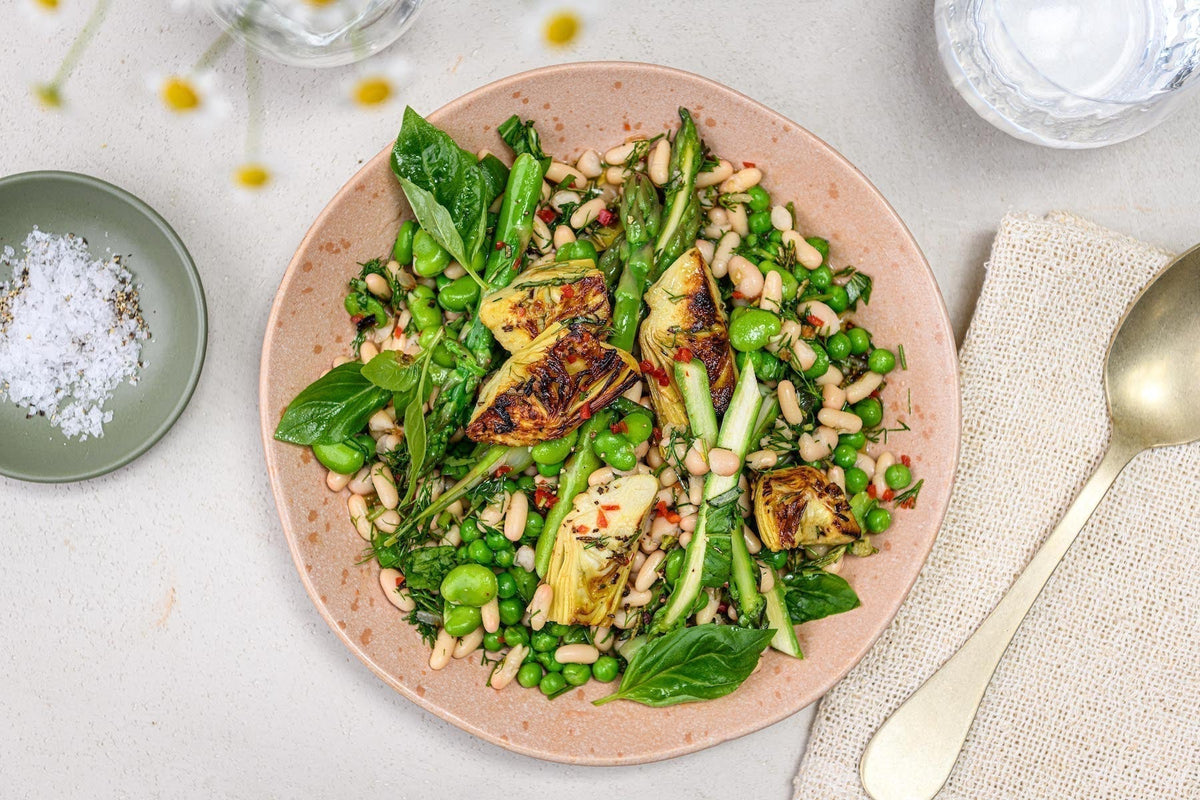
Clean eating has also developed a recognisable aesthetic, but appearance is a poor proxy for nutritional quality. A smoothie, protein bowl or grilled chicken salad may look disciplined and “healthy”, yet that tells us very little about whether it is balanced, satisfying or nutritionally appropriate. Equally, foods that look less polished through the lens of wellness culture can be exceptionally nourishing. A bowl of pasta e fagioli, a lentil stew, rice with beans, vegetable soup, bread with olive oil, yoghurt with fruit, or a dish built from pulses, grains and vegetables may provide fibre, protein, micronutrients, energy and satiety in a way that is both nutritionally sound and culturally ordinary.
The problem is not that wellness foods are superficial, nor that traditional foods are automatically superior. It is that we have become very good at recognising the appearance of health and much less good at asking what a meal actually contains, how it is eaten, and what role it plays in the wider pattern of someone’s diet. A pale bowl with expensive toppings can be nutritionally unremarkable; a rustic bean dish can be deeply balanced. Health does not always photograph in the way the internet has taught us to expect.
“Processed” is another word that can sound morally obvious while concealing enormous differences. Tofu, yoghurt, frozen vegetables, olive oil, bread, tinned fish and fermented foods are all processed, just as sweets, fizzy drinks and highly formulated snack foods are. Those foods are not nutritionally interchangeable, which is why the more useful question is not simply whether a food has been processed, but what it contributes to the wider pattern of someone’s diet.
Many food cultures resist this kind of neat deconstruction anyway. Meals may arrive in the centre of the table, shared between people, with sauces, broths, rice, vegetables, fish, beans, pickles, bread and condiments interacting with one another. The intelligence of the meal sits partly in those relationships, not in a perfectly divided plate.
This feels obvious to me as an Italian. Pasta e fagioli is not simply carbohydrate plus protein. Bitter greens with olive oil are not only fibre and fat. Bread is not merely starch. A tomato sauce is not only an ingredient list. Food carries memory, season, economy, labour, appetite and the intelligence of being eaten with other things.
Of course, cultural food does not receive an automatic health halo either. Traditional diets can contain too much salt, sugar, saturated fat or refined carbohydrate, and traditions change. But the complexity of a dish is not evidence of nutritional failure, just as a meal looking “clean” is not evidence that it is nutritionally complete. A cuisine should not have to be aesthetically simplified before it is allowed to count as healthy.
When rules create more food noise.
This is where clean eating can become particularly difficult, because it often begins as an attempt to reduce uncertainty. People want rules because rules feel safe. They want to know what to buy, what to avoid, what will make them feel energetic, young, calm, less bloated, less inflamed, more in control.
I understand that very well. Food noise is real. The modern food environment asks us to make an extraordinary number of decisions while exposing us constantly to conflicting claims about what those decisions mean. Protein is essential, carbohydrates are dangerous, carbohydrates are necessary, fasting is healthy, breakfast is essential, seed oils are toxic, seed oils are fine, dairy is inflammatory, fermented dairy supports the microbiome. It is exhausting.
The problem is that a system designed to quiet food noise can easily produce more of it.
The rules multiply, acceptable foods shrink, restaurants become stressful, travelling becomes complicated and a meal cooked by someone else becomes something to audit rather than receive. Bread becomes suspicious, sauces need interrogation, dessert begins to carry guilt, and the pursuit of health slowly makes life smaller.
There is also a clinical conversation around orthorexic behaviour: a preoccupation with eating foods perceived as healthy or pure that becomes restrictive, distressing or socially impairing. The term should not be used casually; caring about ingredients, reading labels or avoiding certain foods does not in itself make someone disordered. The concern is rigidity, when rules keep multiplying, foods disappear without suitable replacements, deviations create fear or shame, or eating with other people becomes increasingly difficult.
What makes this particularly hard to recognise is that restriction can be expressed through the language of health. Anxiety can begin to look like discipline, and that is one of the dangers of moralising food.
Food has more than one job.
Nutrition matters enormously, but food has never been only nutrition. It is also how people maintain relationships, express care, celebrate, remember home, welcome guests, comfort children, mark religion, grieve, flirt, host and belong. That social dimension is not decorative; it is part of why food matters.
A nutritionally calculated meal eaten with anxiety and isolation is not automatically healthier than a varied dinner shared with people you love, even if that dinner includes white rice, bread, sauce or dessert. That does not mean pleasure or company somehow cancel out nutritional quality. It means that health is larger than nutrient composition alone, and that a way of eating has to exist inside a life rather than apart from it.
This is also why I am wary of food systems that reduce every meal to a score, label or hierarchy. The question is not only whether something is high in fibre, high in protein or minimally processed, but whether the overall pattern nourishes, satisfies, supports health, fits the person eating it and leaves enough room for culture, pleasure and other people.
Perhaps we need a different word.
I do not think the answer to any of this is to care less about food. Quite the opposite. I care deeply about fibre, protein, plant diversity, metabolic health, digestion, ingredient quality and the way food makes us feel, but I think there is a difference between care and purity, and that distinction matters.
Perhaps this is why I have never felt entirely comfortable with the language of clean eating. It suggests a standard that food has to pass before it can be trusted, when what I am much more interested in is whether a way of eating is thoughtful, nourishing, pleasurable and capable of existing in real life. I prefer the idea of considered eating, not as another wellness label, but as a gentler way of thinking about structure: enough protein to satisfy, enough fibre and plants to support the gut, enough energy to feel properly nourished, and enough flexibility for the pattern to survive restaurants, travel, work, family, celebrations and all the days when life refuses to be perfectly organised.
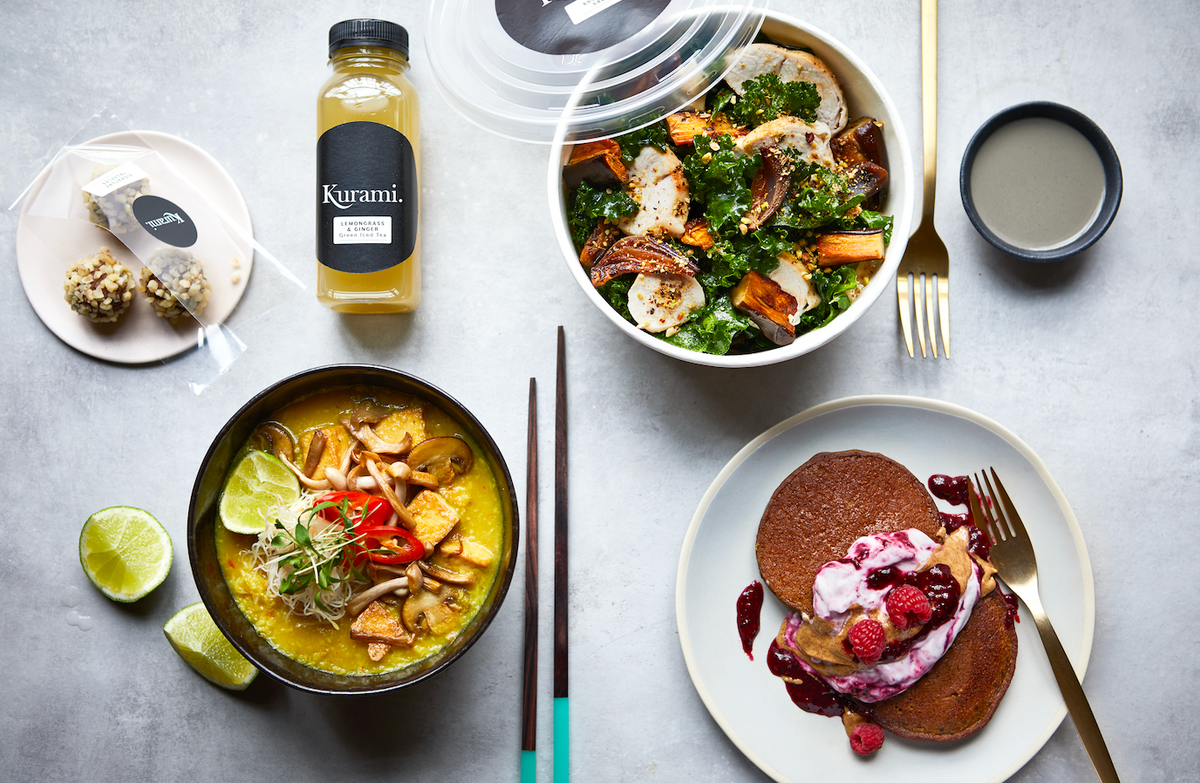
That is much closer to how I think about Kurami. Our food is made without ingredients that contain gluten and without dairy-containing ingredients, and we care enormously about fibre, plant diversity, protein, gut health and nutritional structure, but the purpose has never been to make food feel austere or fearful. The point is to make eating well feel calmer, especially when modern life creates so much noise around what we should and should not be eating.
For me, structure can be helpful without becoming rigid. A meal can be nutritionally considered without becoming clinical, and it can support the body while still being generous, colourful, textured and pleasurable. That is the balance I care about: food that does some of the thinking for you without asking you to turn every meal into a test.
Healthy eating should be able to live alongside travel, restaurants, family tables, sauces, celebrations, appetite and culture. If a way of eating cannot survive those things, then I am not sure it is supporting life in the fullest sense.
Perhaps that is what I would keep from this whole conversation. Food can be careful without becoming pure, structured without becoming rigid, and nourishing without having to look like wellness content. A meal is part of a life, and a good way of eating should make that life easier to inhabit, not smaller.
FAQs
What is clean eating?
Clean eating usually refers to eating more whole or minimally processed foods, vegetables, fruit, legumes and whole grains while limiting foods perceived as highly processed. There is no agreed nutritional definition, which is why the term can range from sensible dietary habits to very restrictive rules.
Can clean eating become unhealthy?
Yes, if it becomes rigid, removes foods unnecessarily, creates fear or guilt, compromises dietary variety or makes social eating increasingly difficult. Caring about nutrition itself is not the problem; excessive rigidity can be.
What is orthorexia?
Orthorexic behaviour describes a preoccupation with foods perceived as healthy or pure that becomes restrictive or causes distress or impairment. It remains an area of active research and should not be used casually to describe anyone who simply cares about ingredients.
Are processed foods always unhealthy?
No. Processing exists on a spectrum. Foods such as yoghurt, tofu, frozen vegetables, bread, olive oil and fermented foods are all processed. Nutritional quality, ingredients, frequency and the food’s role in the wider diet matter more than processing alone.
What does Kurami mean by considered eating?
Considered eating means meals designed with protein, fibre, plant diversity, flavour, texture and pleasure, while leaving room for flexibility and real life. It is structure without turning food into a purity system.
Sources and further reading
World Health Organization, Healthy diet
NIH, Ultra-processed diets cause excess calorie intake and weight gain
British Nutrition Foundation, Ultra-processed foods
Eating and Weight Disorders, Orthorexia nervosa: a review of psychosocial risk factors