

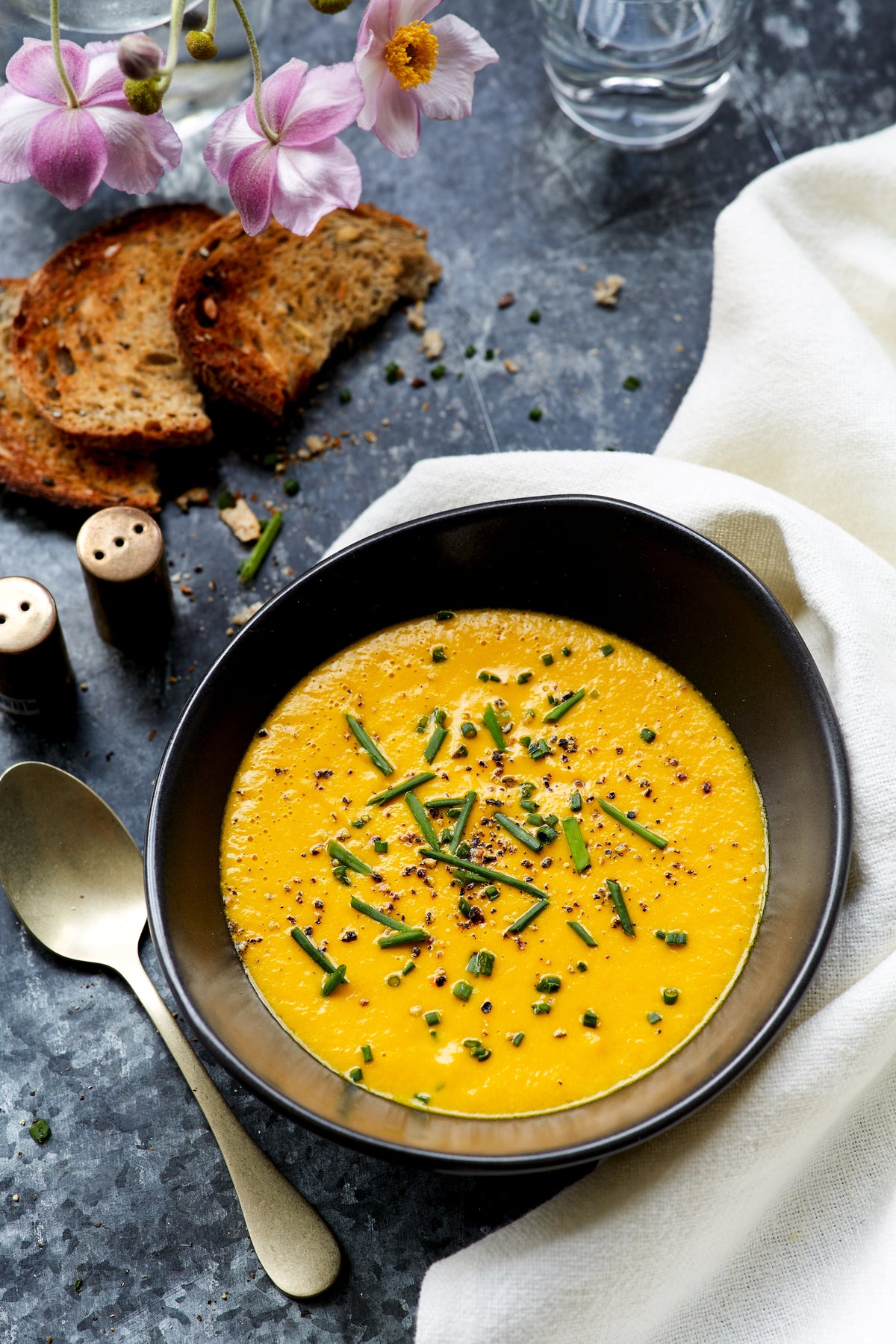
Soup season always seems to arrive with the same promise: something warm, generous and easy enough to make when the light disappears at four in the afternoon. Yet soup also has a strange habit of becoming either far too complicated or not quite a meal at all. We blend three vegetables with stock, call it lunch, and wonder why we are hungry again an hour later; or we throw everything in the fridge into one pot and hope that quantity will somehow become flavour.
Soup becomes much easier once you stop treating it as a recipe and start treating it as a composition. A good bowl needs a base, something that gives it body, vegetables that make sense together, enough protein to make it substantial, a clear flavour direction and, almost always, something fresh or sharp at the end. Once those decisions are made deliberately, the combinations become almost infallible.
The base decides what kind of soup you are making.
A clear broth leaves room for the ingredients to remain distinct. Chicken, vegetable, mushroom or miso broths work really well when there is rice, noodles, greens, tofu, fish or shredded meat that you actually want to taste separately. Tomato gives a different kind of structure: acidity, sweetness and enough body to hold beans, lentils, gluten-free pasta, smoky vegetables or rice. Coconut milk, usually lightened with stock rather than used alone, creates a softer, richer base for ginger, chilli, lime, turmeric, lemongrass, squash, prawns or tofu.
Blended vegetables can also be a base rather than the entire meal. Squash, carrot, cauliflower, celeriac or courgette can give a soup body and sweetness, but I nearly always want something added back into the bowl afterwards: beans, lentils, shredded chicken, tofu, grains, seeds or a crunchy vegetable. The thing is, we need the texture of the meal to be palatable too and to contribute to the feeling of satiety.
Pulse-based soups sit somewhere between base and substance. White beans, chickpeas or lentils can be partially blended into the broth so the soup becomes creamy without needing dairy, while still leaving enough whole pulses for texture. It is one of the oldest tricks in the soup repertoire and still one of the best.
Then give the soup some body.
This is where grains and starches change the entire experience of a bowl. Brown rice absorbs flavour without disappearing. Wild rice keeps its chew and works especially well with mushrooms, chicken and clear broths. Quinoa is lighter and useful with tomato, courgette, herbs and pulses. Buckwheat brings an earthier flavour to mushrooms, miso and cabbage. Millet becomes softer and almost creamy beside squash or root vegetables. Potato gives body without requiring dairy, while small gluten-free pasta shapes immediately move a soup towards familiar Italian comfort.
Beans, chickpeas and lentils can do two jobs at once, bringing fibre, carbohydrate and some protein while thickening the broth around them. This is part of why dishes such as pasta e fagioli, lentil soup or bean-and-greens soups have endured for generations. They were not created as wellness food, they were simply economical, complete meals that understood how to make a small number of ingredients feel generous.
At Kurami, because our food is made without ingredients that contain gluten, I would reach first for rice, quinoa, buckwheat, millet, potatoes, pulses or gluten-free pasta rather than barley, farro or couscous. The point is not that one grain is morally better than another. It is simply to choose one that suits the broth, holds its texture and makes the bowl substantial enough for the role it needs to play.
Vegetables taste better when they have some relationship to one another.
Two or three vegetables with a clear relationship usually taste much more intentional, and frankly better, than seven random ones thrown into the same pot. Squash, carrot and sweet potato naturally sit together because they share sweetness and earthiness. Mushroom, leek and kale work because the softness of the leek and mushrooms can carry a more bitter green. Aubergine, courgette, tomato and pepper belong naturally to a Mediterranean register. Cauliflower, broccoli and leek create something greener and more delicate, while tomato, celery, carrot and cavolo nero give the familiar structure of an Italian bean soup.
The vegetables do not all need to cook in the same way either. A roasted vegetable added to a broth brings something quite different from a vegetable that has simply simmered in it. Charring aubergine before pounding or stirring it into soup gives smoke. Roasting squash concentrates sweetness. Greens added at the end keep colour and texture. Soup is often better when everything has not been boiled into the same softness.
Protein is what stops the bowl becoming a side dish.
Chicken and turkey are obvious because they take on broth flavour so easily, but white fish and prawns can make a lighter soup feel complete without turning it heavy. Tofu works particularly well in miso, ginger or coconut-based soups. Eggs can be poached directly into broth or stirred through in ribbons. Beans, lentils and chickpeas may provide enough protein on their own when the portion is substantial, or they can sit beside another protein when the soup needs more structure.
Protein is just as important as fibre. Together, they help make a soup more satisfying and can support fullness for longer, which is what turns a bowl of vegetables and broth into a proper meal rather than something you are hungry again after an hour.
The principle is simple: the protein should feel as though it belongs to the soup rather than having been added afterwards to satisfy a number. A few decorative chickpeas floating on top of a vegetable purée do not transform it into a satisfying meal. The amount, texture and relationship to the rest of the bowl matter.
Choose a flavour family rather than seasoning at random.
This is perhaps the easiest way to make your soup infallible. Once the flavour direction is clear, the herbs and spices almost choose themselves. Mediterranean soups can move through rosemary, thyme, garlic, lemon and olive oil; tomato-based Italian soups through basil, oregano, chilli and plenty of good olive oil. Cumin, coriander, cinnamon, harissa, and lemon move a soup toward North Africa, while cumin, mint, parsley, sumac, lemon, and tahini give it a different Levantine register.
Turmeric, cumin, coriander, ginger and chilli give lentils, squash and coconut a South Asian direction. Ginger, lemongrass, chilli, lime and coriander work with coconut broth, prawns or tofu. Miso, ginger, spring onion and sesame make sense with mushrooms, tofu and buckwheat noodles. Smoked paprika, cumin, charred vegetables and lemon can turn a tomato or chickpea soup into something much deeper without requiring a long ingredient list.
These are not rules about authenticity, nor an invitation to collapse whole cuisines into spice blends. They are simply useful flavour relationships. The point is to know what direction the bowl is moving in rather than adding cumin, basil, turmeric and miso because each ingredient sounds healthy on its own.
The finish is not decoration.
Soup often tastes flat for one of four reasons: it needs salt, acidity, fat or texture. A squeeze of lemon or lime can wake up an entire pot. Vinegar can do the same for beans or lentils. Olive oil, tahini, sesame or coconut can round out a broth that feels thin. Fresh parsley, coriander, basil, mint or dill bring back the brightness that disappears during long cooking, while toasted seeds, nuts, crispy chickpeas or a spoonful of cooked grains added at the end give contrast.
The last thirty seconds can matter almost as much as the previous thirty minutes.
The infallible combinations.
|
Base |
Body |
Vegetables + protein |
Flavour |
Finish |
|
Tomato + vegetable stock |
Brown rice + cannellini beans |
Cavolo nero + carrot |
Rosemary + garlic |
Lemon + olive oil |
|
Light coconut + stock |
Red lentils |
Squash + spinach |
Ginger + turmeric + chilli |
Lime + toasted seeds |
|
Chicken broth |
Wild rice |
Chicken + mushroom + leek |
Thyme + black pepper |
Lemon + parsley |
|
Tomato broth |
Quinoa + chickpeas |
Aubergine + courgette |
Cumin + coriander + chilli |
Parsley + lemon + olive oil |
|
Miso broth |
Buckwheat noodles |
Tofu + mushrooms + greens |
Ginger + spring onion |
Sesame + chilli |
|
Light coconut + stock |
Brown rice |
Prawns + courgette |
Lemongrass + ginger + chilli |
Lime + coriander |
|
Tomato + bean broth |
Potato + cannellini beans |
Greens + celery |
Basil + garlic |
Olive oil + black pepper |
|
Carrot + vegetable broth |
Millet + white beans |
Carrot + leek |
Cumin + ginger |
Lemon + pumpkin seeds |
These are deliberately combinations rather than recipes. Quantities will depend on whether the soup is a starter, a lunch, or a full dinner, and the protein and fibre will depend on the portions used. What matters is the architecture: a broth with a purpose, something substantial in the bowl, vegetables that belong together, enough protein, a coherent flavour direction and a finish that makes you want another spoonful.
Soup is comfort food, but it does not need to be nutritionally vague.
People tend to put soup into one of two categories: indulgent comfort food or austere health food. Some of the world's most enduring soups are satisfying precisely because they were designed around ordinary ingredients that support one another: grain and pulse, broth and vegetable, meat and rice, beans and greens, acidity and fat.
At Kurami, that is how I think about a complete bowl. Protein and fibre matter, as do vegetables and plant diversity, but those nutritional elements have to live inside something people genuinely want to eat. A soup should be warming, textural and properly seasoned. It should feel generous rather than corrective.
Once you understand the formula, soup also becomes one of the easiest places to improvise without wasting food. A handful of cooked rice, half a tin of beans, roasted vegetables from yesterday, herbs beginning to soften in the fridge and a good broth can become dinner without feeling like leftovers. Perhaps that is why soup has lasted so well across so many food cultures. It is less a recipe than a way of organising what is available into something coherent.
The formula is useful, but the final test is simpler: the bowl should satisfy you enough that you are not looking for lunch again an hour later, and taste good enough that you are already thinking about the next spoonful.
FAQs
What makes soup filling?
A filling soup usually combines enough protein with fibre-rich vegetables, pulses, grains or potatoes, rather than relying on blended vegetables and broth alone. Fat, texture and adequate portion size also affect how substantial the meal feels.
What are the best gluten-free grains for soup?
Brown rice, wild rice, quinoa, buckwheat and millet all work well in soup. Potatoes, pulses and gluten-free pasta are useful alternatives when you want more body without using a grain.
How do I stop soup tasting flat?
Check salt first, then add acidity, fat and freshness. Lemon, lime or vinegar can lift a broth; olive oil, tahini, sesame or coconut can round it out; fresh herbs and toasted seeds can add contrast at the end.
Can soup be a complete meal?
Yes. A soup can function as a complete meal when it contains a substantial source of protein, fibre-rich carbohydrate or pulses, vegetables, enough energy and a satisfying balance of flavour and texture.