

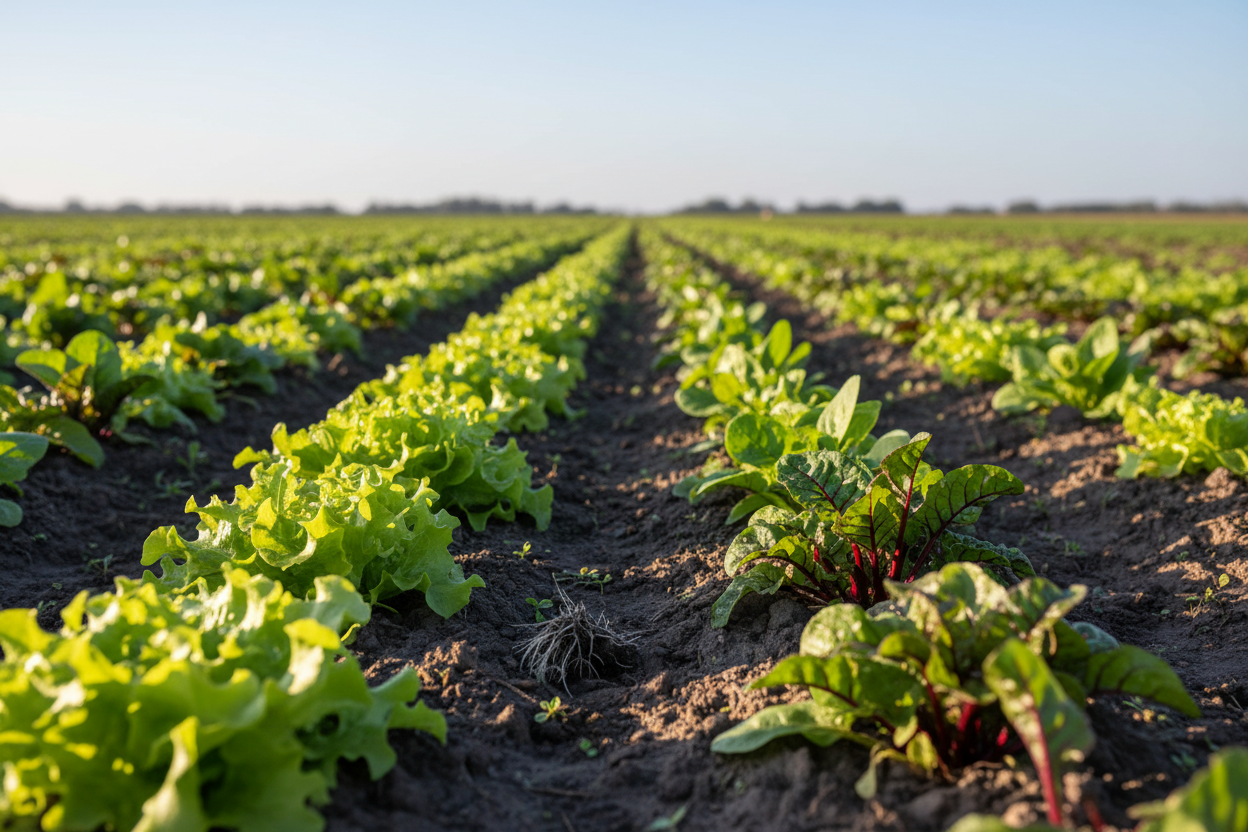
Summer is the season when salad comes back to the centre of the table, but I think we often misunderstand it, reducing it to something light, green and vaguely virtuous, when really salad can be one of the most intelligent ways to eat with heat, appetite, digestion and pleasure.
I have always found it strange that we speak about “salad” as though it were one single thing, as though a pale, crunchy iceberg, a bitter leaf of radicchio, a soft handful of valeriana and a peppery pile of rocket were all basically doing the same job because they happen to be raw, green-ish and served in a bowl. They are not.
What better time than summer to delve into this topic?
When it is hot, the body often asks for food that feels fresher, more mineral, more hydrating and easier to meet, but that does not mean summer food should feel empty, apologetic or unfinished. A salad should not be a cold bowl of leaves pretending to be a meal; it should have enough texture, flavour, fat, protein, fibre and beauty to feel complete in its own right. A good summer salad is much more considered than that.
This is something we think about a lot when developing new dishes for our Kurami clients, because food that is technically “light” can still feel emotionally unsatisfying if it has no generosity, colour, texture or pleasure.
We are not interested in sad food. The eyes eat first, but so does the mind: a meal that looks abundant, colourful and cared for can change how the body receives it.
Satiety is not only mechanical fullness. It is also flavour, contrast, warmth, beauty, enough protein, enough fibre, enough fat, and the quiet feeling that the meal has actually met you where you are. A salad should not feel like a reduction of food. It should feel like food, composed differently.
It is texture, bitterness, water, fibre, olive oil, acidity, protein, salt, herbs, colour, and the very specific intelligence of choosing the right leaf for the right moment.
Some leaves are soft and gentle. Some are bitter. Some are watery and crisp, there almost for pleasure more than nutrition. Some are peppery and alive in the mouth. Some are beautiful as a base, others only make sense as an accent. And some, depending on the person, the season, the dressing, the portion and the state of the digestive system that day, can feel either wonderfully light or strangely uncomfortable.
Salad has spent too long being treated as the virtuous option, the thing one orders to compensate, restrict, reset or perform some idea of discipline, when really it can be one of the most generous and intelligent ways to eat with the season. At Kurami, salad is not diet food, not punishment, and certainly not a sad bowl of leaves chosen out of obligation; it is a composition of texture, bitterness, fibre, hydration, acidity, dressing, colour, protein, pleasure and personal tolerance, built around what the body wants in summer without forgetting that food should still feel like food. The truth is that not all summer salad leaves suit all bodies in the same way, and that does not mean we need to become obsessive. It simply means we can be more attentive.
Valeriana: the tender one.
In Italy, valeriana is one of those leaves that feels almost too delicate to be called salad.
Small, soft, mild, pretty. The kind of leaf that does not argue with anything else on the plate. It works with olive oil and lemon, with potatoes and eggs, with fish, avocado, herbs, seeds, even with a very simple dressing and nothing more. It is often treated as one of the gentler salad leaves, and I understand why. Compared with tougher, more fibrous or more bitter leaves, valeriana feels softer in the mouth and less demanding in a salad. It does not have the hard structure of romaine, the crunch of iceberg, the pepperiness of rocket or the bitterness of chicory.
Nutritionally, it is also more interesting than its delicate appearance suggests. Like many soft green leaves, it brings micronutrients and plant compounds, including vitamin C, and it can be a beautiful way of adding something green, fresh and mineral to a summer plate while keeping the salad soft, generous and easy to enjoy.
I would be careful about saying it is “good for IBS” or “good for babies” in a sweeping way, because digestion is individual and children’s food always depends on age, preparation and safety. But as a culinary instinct, valeriana makes sense when you want something tender, mild and easy to love. For me, it is the leaf of softness.
The leaf you choose when you want your summer salad to feel fresh, but not sharp. Green, but not demanding.
Romaine: the crisp one people blame too quickly.
Romaine is funny because it is so loved and so accused at the same time.
It is crisp, structured, almost architectural. It holds dressing beautifully. It makes sense in Caesar-style salads, chopped salads, grilled lettuce, little gem-style plates and anything that needs a leaf with a spine, but many people also say lettuce makes them bloated, and this is where we have to be precise.
Romaine is not inherently indigestible. Lettuce is generally considered low-FODMAP, so it is not automatically one of the obvious foods to remove for someone with IBS. But real bodies are not food lists. A food can be technically low-FODMAP and still not feel good to a person on a particular day.
A large bowl of raw romaine can be bulky. It can be a lot of water, fibre, chewing and volume. For some people, especially those who already struggle with bloating, distension or a very sensitive gut, that can feel uncomfortable. That does not make romaine inherently “bad”, or a food to avoid, but rather, that context matters.
How much of it are you eating? Is it raw or grilled? Is it dressed with enough fat and acid? Is it eaten alone as a huge cold salad, or alongside protein, warm vegetables, grains, potatoes or something more grounding? Is your digestion calm that day, or already irritated?
There is also a rare allergy point around lettuce. Lettuce allergy and contact reactions do exist, although they are not common enough to turn lettuce into something frightening. It is simply a reminder that even the most ordinary foods can be personal.
For me, romaine is useful, especially in summer when we want crunch and freshness, but it is not always the most elegant choice for a sensitive stomach.
If it makes you feel bloated, you do not need to abandon salad. You may just need a softer leaf, a smaller portion, a warmer element, or a salad that is not entirely built around raw crunch.
Cappuccina and butterhead: the quieter lettuces.
Then there are the softer lettuces. Cappuccina, butterhead, those rounder, more yielding leaves that feel less structured than romaine and less watery than iceberg.
They are not dramatic. They do not arrive with the nutritional glamour of dark leafy greens or the bitterness of chicory. But they are very useful, especially in summer, when sometimes what you want is simply freshness without intensity.
There is something quite beautiful about a soft lettuce salad when it is done properly: good olive oil, vinegar or lemon, salt, maybe herbs, maybe cucumber, maybe boiled eggs or grilled fish or potatoes. Nothing complicated, but satisfying at the same time!
These leaves are often more forgiving than romaine because they do not have the same hard rib and raw crunch. Again, I would not say they “treat” bloating or are universally easier to digest, because the body is too individual for that kind of certainty. But as a culinary choice, they are softer, calmer and often more pleasant when you want a summer salad that feels fresh rather than forceful. They are the leaves of everyday eating, not impressive, maybe, but extremely useful.
Honestly, not everything needs to be impressive. Some foods are good because you can actually imagine eating them often.
Rocket: the peppery one pretending to be garnish.
Rocket is one of the most underestimated salad leaves because people use it as decoration, when really it has much more to say.
It belongs to the same broad plant family as broccoli, cabbage, cauliflower and mustard, which explains some of its character: the pepperiness, the slight bitterness, the feeling that the leaf is alive in your mouth. It is not a passive green.
Rocket brings vitamin K, vitamin C, folate and minerals such as calcium, although of course the amount matters. A few leaves on top of a pizza are not the same as a proper serving.
What I love about rocket is that it changes the intelligence of a dish immediately. In summer, it cuts through richness beautifully. It makes roasted vegetables more interesting. It works with lentils, beans, chicken, fish, eggs, potatoes, citrus, figs, peaches, parmesan-style flavours, lemon and olive oil.
It is not always the gentlest leaf. Some people find it too sharp, too peppery, too stimulating, especially in large amounts, although, honestly, truly spicy, peppery rocket is much harder to find now than it should be. So much of what is sold as rocket today can taste a little flat: not properly sharp, sometimes just bitter, without that lovely mustardy heat that makes the leaf so exciting. But when rocket is good, and when it is used well, it is one of the easiest ways to make a summer salad feel more adult.
Rocket is not only a garnish. In Italy, it often becomes the whole point of a very simple lunch: a handful of rocket with bresaola, Parmigiano, good olive oil and perhaps a squeeze of lemon. Nothing complicated, but exactly right. Peppery, salty, savoury, mineral, satisfying.
Iceberg: the leaf everyone insults.
Iceberg is treated so badly by the wellness world, and I think that says more about wellness than it does about iceberg.
Is it the most nutrient-dense leaf? No.
Is it the most interesting from a micronutrient perspective? Also no.
Iceberg is crisp, cold, watery and incredibly refreshing, which is sometimes exactly what a summer salad needs. It is not there to be profound. It is there for crunch, coldness and pleasure. The way it holds a creamy or acidic dressing, the way it makes a chopped salad feel fresh and almost nostalgic, the way it works with avocado, prawns, egg, herbs, lemon, yoghurt, mustard or something salty. I would not choose it for depth, but I also would not dismiss it, because in summer there is something great about a leaf whose entire personality is freshness.
Escarole, endive, Belgian endive and chicory: the bitter leaves.
The chicory family! Escarole, endive, Belgian endive, chicory, radicchio. These leaves belong to a different emotional world from soft lettuce. They are bitter, structured, sometimes crisp, sometimes tough, sometimes slightly demanding. They do not try to be universally liked.
In Italy, we are quite used to bitterness. Radicchio, puntarelle, cicoria, scarola, artichokes, bitter aperitivi, greens cooked with olive oil and chilli.
Bitter flavours are part of the table, not something to be hidden immediately under sweetness.
They give a meal contrast, appetite and a certain seriousness, although I also understand that they are not to everyone’s taste.
I am so used to having bitter greens on the table that a meal can almost feel unfinished without them. One or two bitter vegetables, boiled, steamed, or ripassati after cooking, tossed again in a pan with olive oil, and chilli flakes, are such a normal part of the way I understand eating that I sometimes forget it is not universal. They are not there as decoration. They are there for contrast, appetite, fibre, bitterness, and that slightly adult feeling of a plate that has been properly composed.
In the Netherlands, where my partner is from, there is another beautiful relationship with bitterness through witlof, the pale yellow-white chicory that is often eaten raw, grilled, baked with ham and cheese, or even folded into mashed potatoes. I find that very interesting, because it shows how the same family of leaves can move between salad, side dish, comfort food and almost medicinal-seeming food depending on the culture.
Bitter leaves have a long history in European food cultures. We eat them before meals, with meals, raw, grilled, sautéed, dressed with anchovy, lemon, mustard, honey, olive oil, vinegar, nuts, beans, eggs, chicken or citrus. They belong to the same universe as aperitivo, artichokes, dandelion greens, bitter liqueurs and all those foods that suggest digestion is not only a biological process, but also a ritual.
Bitterness has often been used as a signal. A beginning. A way of waking up appetite. A way of making fat, acid and salt feel more balanced. A way of making a meal feel more composed. There is physiological plausibility here too, because bitter taste receptors are involved in digestive signalling, but I would be very careful not to turn this into a medical claim. Bitter leaves do not “fix” bloating. They are not a gallbladder treatment. Anyone with gallstones, bile issues, reflux or significant digestive symptoms should not start using bitter foods as a remedy.
They remind us that summer food does not always have to be sweet, soft and easy. Sometimes the leaf that asks more of you gives more back.
Radicchio: the theatrical one.
Radicchio deserves its own moment because it is not just bitter, but rather, it is dramatic.
That deep red colour, the structure, the almost architectural shape, the slightly difficult bitterness. It is a very Italian leaf in the sense that it understands balance. It is not trying to be eaten alone in a sad bowl. It wants fat, acid and salt. It wants olive oil, vinegar, citrus, anchovy, walnuts, beans, eggs, grilled chicken, roasted squash, tahini, something creamy, something warm. Raw, it can be severe. Grilled or roasted, it softens and becomes smokier, more generous, more interesting.
Spinach: the dependable one.
Spinach is so familiar that we almost stop seeing it, which is unfair, because it is one of the greens I find myself coming back to constantly.
I have been trying to integrate more of it myself, especially thinking about iron, and spinach is one of those ingredients that makes that feel quite effortless. It disappears beautifully into food. I add it to everything: eggs, soups, warm bowls, fish, stews, pasta-style dishes, and one of my favourite easy dinners is cod baked with spinach and leek, with potatoes on the side. Very simple, very nourishing, very much the kind of food that makes sense on a weeknight.
At Kurami, we use spinach a lot for the same reason. It is versatile, familiar, deeply green, and easy to fold into dishes without making them feel too virtuous or too worthy. It brings folate, vitamin K, vitamin C, plant compounds and non-haem iron, although it is worth remembering that plant-based iron is absorbed differently from iron from animal foods, and that vitamin C can help support absorption.
Raw, I prefer baby spinach, or spinacini. Larger spinach can feel a little too fibrous raw, and often makes more sense cooked or wilted. Baby spinach, on the other hand, can work beautifully in summer salads because it is soft, dark and easy to combine with other leaves, herbs, citrus, fish, eggs, lentils, potatoes or seeds.
It also becomes much easier to eat in quantity when cooked, because the volume collapses. For people who struggle with enormous raw salads, cooked or wilted greens can sometimes be a better way of eating more plants without asking the digestive system to process a mountain of cold fibre.
There is also the oxalate point, which matters for people prone to certain kidney stones, so again, no leaf is universally perfect for everyone.
Spinach is dependable, easy to use and great nutritionally, but it should not be the only green in your life. Plant diversity matters, and summer salad is one of the easiest places to practise it.
So, which salad leaf is best in summer?
The honest answer is that there is no best leaf. There is the leaf that suits the season, the dish, the digestion, the appetite and the person.
If you want softness, choose valeriana, cappuccina or butterhead.
If you want crunch, choose romaine, little gem or iceberg.
If you want pepperiness, choose rocket.
If you want bitterness and complexity, choose escarole, endive, chicory or radicchio.
If you want density, use rocket, spinach, darker mixed leaves and bitter greens.
If your digestion is sensitive, start smaller, softer and simpler, and notice what actually works for you.
The mistake is thinking summer salad has to be a huge cold bowl of raw leaves.
A better summer salad might be half leaves and half cooked vegetables. It might include protein. It might include potatoes, grains, lentils, beans, eggs, fish or chicken. It might be dressed properly with olive oil, lemon, vinegar, herbs, tahini, mustard, yoghurt-style dressing or something sharp enough to make the leaves come alive.
At Kurami, this is how we think about salad: not as diet food, but as composition.
A proper summer salad has architecture. It has softness, crunch, bitterness, acidity, fat, protein, fibre and colour. It should not leave you cold, hungry or punished. It should feel abundant, seasonal and alive. Salad, at its best, is not a symbol of restriction.
It is one of the most beautiful ways to eat more plants when the season is asking us to eat with more freshness, more colour and more pleasure.
Camilla Pigozzi Garofalo studied social anthropology and the anthropology of food before founding Kurami, a gut-health meal delivery company focused on plant diversity, balanced nutrition, and sustainable ways of eating. She writes about food culture, eating rituals and the relationship between nutrition and everyday life.
FAQs.
What are the best salad leaves for summer?
The best summer salad leaves depend on the dish and the person. Valeriana and butterhead are soft and mild, romaine and iceberg bring crunch, rocket adds peppery intensity, and bitter leaves such as radicchio, endive and chicory add complexity.
Is romaine lettuce good for digestion?
Romaine lettuce is generally considered a low-FODMAP vegetable, but some people still find large raw salads bloating because of volume, fibre texture and individual sensitivity.
Which salad leaves are most bitter?
Radicchio, chicory, escarole, endive and Belgian endive are some of the most common bitter salad leaves. They are often used in European food cultures to bring contrast, appetite and complexity to a meal.
Is rocket a healthy salad leaf?
Rocket is a peppery salad leaf from the Brassicaceae family, the same broad plant family as broccoli, cabbage and cauliflower. It contains vitamin K, vitamin C, folate and plant compounds, though its nutritional contribution depends on portion size.
Sources and further reading
- Monash University FODMAP Diet. “High and Low FODMAP Foods.”
- Monash University FODMAP Diet. “About FODMAPs and IBS.”
-
Paulsen E. “Lettuce contact allergy.” Contact Dermatitis, 2016.
- Nature Reviews Gastroenterology & Hepatology. “Bitter taste receptors as sensors of gut luminal contents.”
- North Bristol NHS Trust. “Additional information if you form calcium oxalate stones.”
- PubMed — “Bitter taste receptors as sensors of gut luminal contents”