

There is a noticeable change taking place in British supermarkets. Walk through M&S, Tesco, Sainsbury’s, or Waitrose, and health is no longer communicated only through calories, fat, sugar, and salt. Fibre is being called out on shelf labels, organic ranges are being expanded, and everyday products are appearing with deliberately shorter ingredient lists and much more explicit language around simplicity, recognisability and what has, or has not, been added.
M&S has expanded its Only...Ingredients range across foods as varied as meatballs, burgers, bread, baked beans, cereals, yoghurt, mayonnaise, oat drink and ice cream, while Tesco launched its Just x Ingredients range in October with three-ingredient beef burgers and meatballs and six-ingredient sausages and chipolatas. Sainsbury’s has introduced Full on Fibre labelling across more than 500 products, and Waitrose continues to use health markers to make nutritionally stronger choices easier to identify. None of these initiatives is identical, but together they point towards a shopper who still wants convenience while asking more questions about what that convenience contains.
Convenience, but with different expectations.
Convenience transformed how people ate during the twentieth century for practical reasons. Food became easier to store, easier to prepare and less demanding of domestic labour, which mattered enormously as household structures and working lives changed. That need has not disappeared. People still want food that fits around work, children, travel, exercise, social lives and all the unremarkable pressures of an ordinary week.
What seems to be changing is the expectation surrounding that convenience. A prepared product may now also be expected to say that it is high in fibre, contains fewer ingredients, uses British produce, belongs to an organic range or has been made without particular preservatives. The promise is no longer simply that food will save time; increasingly, it is that it will save time without asking us to give up transparency, nutritional purpose or a sense of care.
The same shift is visible outside supermarkets. Large food companies are watching the way appetite and expectations are changing as GLP-1 medicines become more widely used, while protein, fibre, portion flexibility and satiety move further into mainstream food culture. McDonald’s has openly discussed how customers using GLP-1s are eating differently and has been exploring more protein-forward options and greater portion flexibility. Tesco’s chief executive has similarly described a broader movement towards smaller portions and more nutritionally balanced meals with higher protein and fibre, while stressing that GLP-1 use is only one part of a wider change in behaviour. Taken together, this suggests that the definition of a useful meal is shifting across the whole food industry, not only in the health-food aisle.
Why shorter ingredient lists feel reassuring.
There is obvious reassurance in turning over a packet and immediately understanding what is inside. Beef, salt and pepper are easy to interpret; a long list of stabilisers, extracts and unfamiliar names asks more of the shopper, especially at a time when ultra-processed food and additives are constantly discussed. A shorter ingredient list can therefore feel like transparency, and retailers have recognised that ingredient count has become part of the product story.
That does not mean that fewer ingredients automatically make a food healthier. Ingredient count is a very imperfect nutritional measure. Fortification, fermentation, preservation and stabilisation can all add ingredients for useful reasons, while a very simple product can still be high in salt, sugar or saturated fat. Many foods we routinely consider nutritious are processed in some form, from yoghurt and tofu to olive oil, frozen vegetables, tinned beans and bread, while some foods classed as ultra-processed can still contribute useful nutrients such as fibre.
The appeal of minimal-ingredient ranges is therefore about more than processing itself. They offer food that feels easier to read and closer to the way we imagine we might have prepared it ourselves. Simplicity has become part of the language of trust.
From avoiding nutrients to seeking them out.
Supermarket nutrition has also shifted direction. For years, much of the language centred on restriction: less fat, less sugar, fewer calories, reduced salt. Those measures still have a place, but retailers are increasingly pointing shoppers towards things to seek out as well. Protein has become almost impossible to miss, fibre is moving into much more visible territory, and gut health, fermented foods and plant diversity have entered mainstream retail rather than remaining confined to specialist shops.
Sainsbury’s decision to identify more than 500 products through Full on Fibre is a good example. Fibre itself is not new, and its nutritional importance has not suddenly changed, but its cultural visibility has. The shelf is beginning to organise food not only by what it is, but by what the shopper hopes it will do: a pasta can be presented through fibre and protein, a yoghurt through gut health, a cereal through minimal ingredients, and fresh produce through a retailer’s health criteria.
Supermarkets respond to consumer demand, but they also help shape it. Once a nutrient or quality is repeatedly highlighted in store, shoppers learn to notice it, compare it and eventually expect it.
Simplicity without turning food into a purity test.
The language differs from retailer to retailer, but the direction is remarkably consistent: food that feels simpler, more recognisable and easier to trust. M&S itself describes minimal ingredients as a major health trend for 2026, Tesco says its new range responds to customer demand for fewer ingredients, and Sainsbury’s is making fibre easier to find at scale. This does not amount to a rejection of modern food production; it looks more like a demand for modern food production to become more legible.
There is an important distinction here, because simplicity can easily become confused with purity. A long ingredient list is not automatically evidence of poor food. A recipe containing several vegetables, herbs, spices, seeds, pulses and components within a sauce may be long precisely because it contains variety. The more useful question is not simply how many ingredients are present, but why they are there and what the food offers as a whole.
Where prepared food fits.
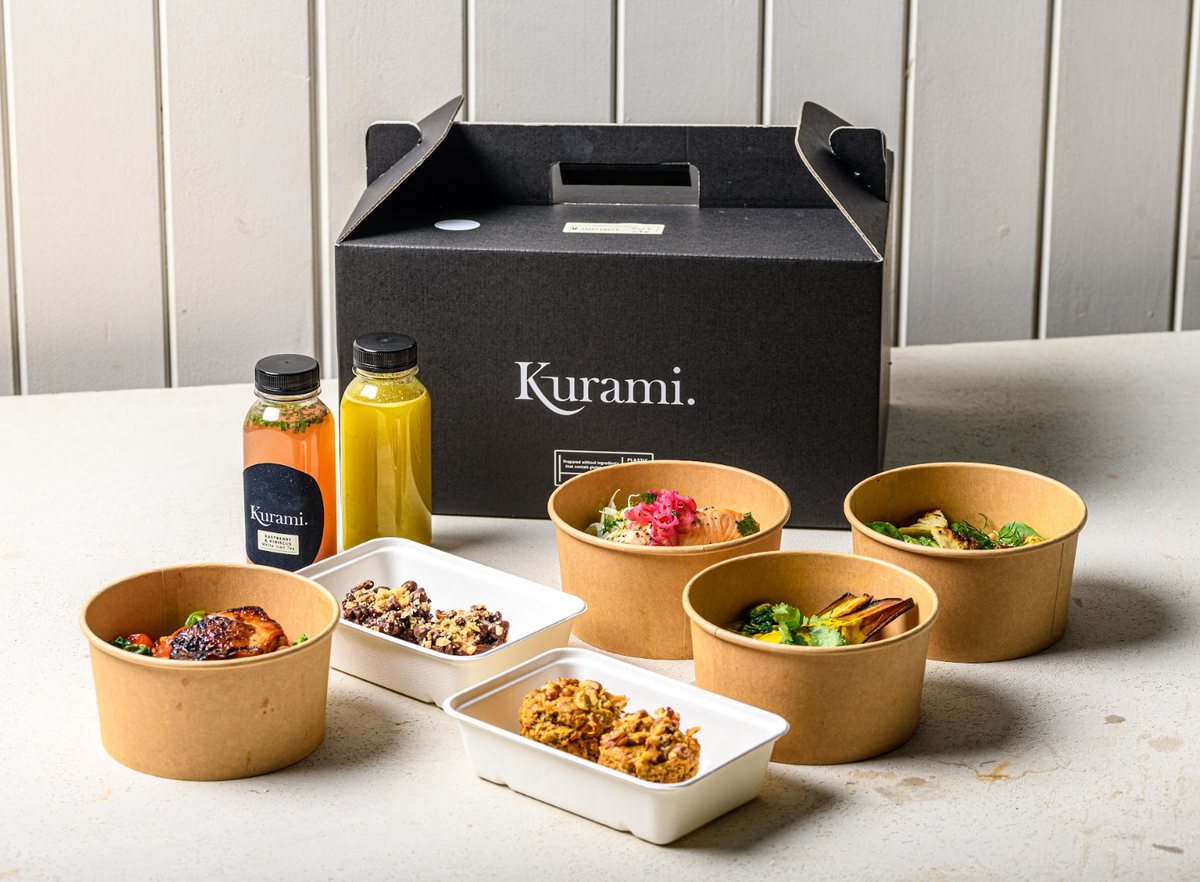
This shift feels familiar at Kurami because it reflects the same balance our clients want. People want food that is convenient, but convenience alone is not enough. They also care about protein, fibre, plant diversity, ingredient quality, portion size, flavour and whether a meal is substantial enough to carry them through the day. Prepared food does not have to sit at the opposite end of the spectrum from thoughtful food; a meal can be cooked by somebody else and still be carefully composed.
Some Kurami recipes are naturally very simple, while others include a longer list because they contain several vegetables, herbs, spices, seeds, pulses, or sauces. Simplicity is useful when it serves the food, but complexity is not a problem when it reflects genuine variety. The aim is not to make a label look minimal for its own sake; it is to make sure that everything in the meal has a reason to be there, nutritionally or culinarily, and that the result is something people genuinely want to eat.
What supermarkets reveal about how Britain wants to eat.
Supermarkets are useful places to watch food culture change because they have to respond at scale. A niche wellness idea can circulate online for years without changing the weekly shop, but when several of the country’s largest retailers begin changing product development, shelf labels, and merchandising around the same concerns, those ideas move much closer to everyday life.
British shoppers appear to want several things at once. They still want convenience, but they also want food that feels recognisable; they want fibre and protein to be easier to find, health information to be easier to interpret and ingredient lists that do not require specialist knowledge to understand. They want prepared food without automatically assuming that preparation has removed everything good from it.
The supermarket of the moment is therefore not asking shoppers to choose between modern convenience and an idealised return to cooking everything from scratch. It is trying to make convenience feel more transparent, more intentional and closer to the principles people now associate with eating well. That may be the more significant shift: not less convenience, but convenience that people feel they can understand and trust.
References.
Tesco, “Tesco launches new Tesco Finest Just x Ingredients range” (1 October 2026)
M&S Food, “Only... Ingredients” range
M&S Food, “Top Health Food Trends 2026”
Sainsbury’s, Q1 2026 trading statement – Full on Fibre labelling across 500+ products
British Nutrition Foundation, “Ultra-processed foods”
Reuters, “Tesco expects moderation trend to curb festive alcohol sales” (8 October 2026)
McDonald’s Investor Day 2026 transcript – protein, portion flexibility and GLP-1 customers
FAQs.
Are foods with fewer ingredients always healthier?
Not necessarily. A shorter ingredient list can make a product easier to understand, but it does not tell us everything about its nutritional value. A simple product can still be high in salt, sugar or saturated fat, while a longer recipe may contain a valuable variety of vegetables, pulses, herbs and seeds.
What is the difference between processed and ultra-processed food?
Processing includes everyday methods such as freezing, cooking, fermenting and pasteurising. Ultra-processed foods typically involve more extensive industrial processing and may contain ingredients rarely used in home cooking.
Why are supermarkets highlighting fibre?
Fibre is becoming a more visible part of the conversation around eating well. Supermarket labels can help shoppers identify sources of fibre more easily, bringing attention to a nutrient that has often been overshadowed by protein and calories.
What should I look for when choosing convenient food?
It can help to look beyond a single promise on the front of the packet. Consider the ingredients, fibre and protein content, salt and saturated fat, and how the food fits alongside what you eat throughout the day. Flavour, satisfaction and practicality deserve a place in that decision too.