
By Camilla Pigozzi Garofalo
On kimchi, cultural context, and why “fermented” does not automatically mean balanced.
In March 2026, the British Heart Foundation published a report highlighting that some foods marketed as gut-friendly may also contain high levels of salt or added sugar. The discussion that followed sparked a broader conversation about fermented foods, gut health, and how wellness products are marketed.
The report highlights that some commercially available fermented and “gut-friendly” products, including certain kimchis, kombuchas, kefirs and miso products, may contain higher levels of salt or added sugar than consumers expect. The concern was not fermentation itself, but the nutritional composition of some packaged products marketed primarily through wellness language.
It is an important conversation. But I also think some nuance can get lost when foods are discussed in isolation from the wider dietary and cultural contexts they come from.
The question is not whether a fermented food is inherently good or bad. It is how that food is eaten, in what form, how often, and within what overall dietary pattern. That distinction matters more than any individual ingredient.
The context that gets lost.
I studied the anthropology of food, and one of the things that the discipline teaches you is that food almost never means what it appears to mean when you strip it from its cultural context.
Take kimchi. In Korea, kimchi is typically eaten as part of a wider meal rather than treated as a standalone health product. It is often served as banchan, small shared side dishes eaten alongside rice, soups, vegetables, legumes, seafood, and other dishes. It can also appear in stews, fried rice, pancakes, and other everyday preparations.
Foods like kimchi have historically been valued not only for preservation and nourishment, but for flavour, practicality, seasonality, and their role within shared meals and everyday eating rituals.
This context can sometimes become flattened when foods move into mainstream wellness culture, where ingredients are often marketed in isolation from the wider dietary patterns they traditionally belong to. An ingredient that has historically been one component of a meal becomes positioned as a shortcut to gut health. It gets packaged, branded, and sold as a product rather than eaten as part of a wider way of eating, and that transformation significantly changes the conversation around it.
What actually happens when food gets scaled?
When culturally specific fermented foods are manufactured for mass distribution, the practical considerations change significantly. Companies have to think about shelf life, flavour consistency, transport stability, food safety, and consumer appeal across very different markets and tastes.
That can sometimes mean higher levels of salt, sugar, acid, or flavour additives than someone eating a more traditional preparation of that food might expect. A jar of commercially produced kimchi or kombucha sitting on a supermarket shelf for months is a materially different product from something prepared fresh or consumed within the context of a traditional meal. Not necessarily worse, but different in ways that matter in nutrition discussions.
This does not make packaged fermented foods inherently problematic. It simply means that “fermented” on a label does not automatically mean “balanced”, “low in sodium”, or suitable in unlimited quantities.
Korean nutrition guidance has long acknowledged that fermented staples such as kimchi, doenjang, and gochujang, as well as soups and stews, can contribute meaningfully to sodium intake. The response historically has not been to fear or avoid these foods altogether, but to moderate portions where needed, use lower-sodium preparations where possible, and keep the wider diet balanced.
That feels like a sensible and proportionate way to approach the current conversation, too.
Label literacy without the fear.
Where I do think the discussion is useful is around label literacy. Not obsessive tracking or fear around food, but informed awareness. Looking at sodium and sugar content, understanding what a realistic portion size looks like, and considering the overall balance of a day rather than treating a single food as either a cure or a risk.
A product can be fermented and plant-based and still be marketed with gut-health language, even if it's high in salt or sugar. Wellness framing on packaging tells you about marketing positioning, not necessarily nutritional composition. Those are two different things.
At the same time, foods do not need to be perfect to have value. Fermented foods can absolutely still be part of a balanced and enjoyable way of eating. The conversation becomes more helpful when we move away from extremes and focus instead on context, variety, and overall dietary patterns.
How we approach it.
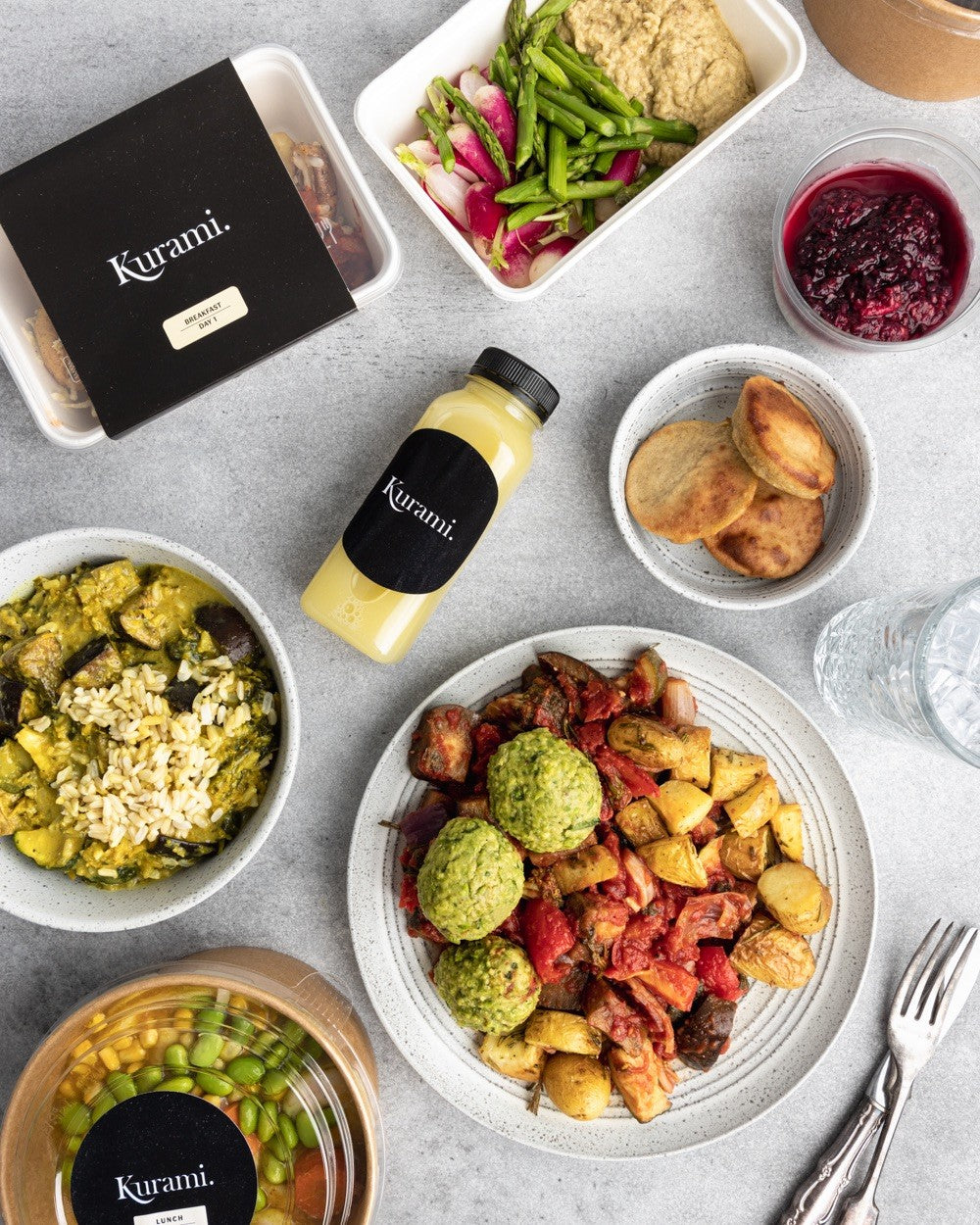
At Kurami, we use fermented ingredients, including kimchi and tempeh, for their culinary depth, cultural significance, and the role they can play in a varied, fibre-rich way of eating. They are not a health claim in and of themselves. They are ingredients that bring flavour, texture, and diversity.
As our meals are made fresh and built around complete meal composition, we approach fermented foods differently from a shelf-stable retail product designed for a very long shelf life. We can think about salt, balance, fibre, and portion size in the context of a whole meal rather than as a single marketed ingredient.
The recent discussion around fermented foods is a useful reminder that nutrition conversations are rarely helped by absolutes. Kimchi is not automatically balanced simply because it is fermented, but neither is it something to fear. The same is true of many foods that become flattened into wellness trends once removed from their original context.
The goal is not to find a superfood or eliminate a food entirely. The goal is to build a varied, satisfying, culturally grounded way of eating that supports both enjoyment and balance over time. That has always been the more sustainable approach.
Camilla Pigozzi Garofalo studied social anthropology and the anthropology of food before founding Kurami, a meal delivery service with a focus on gut health, built around nutritionist-designed, plant-rich eating. She writes about food culture, nutrition, and the implications of separating food from its cultural context.