
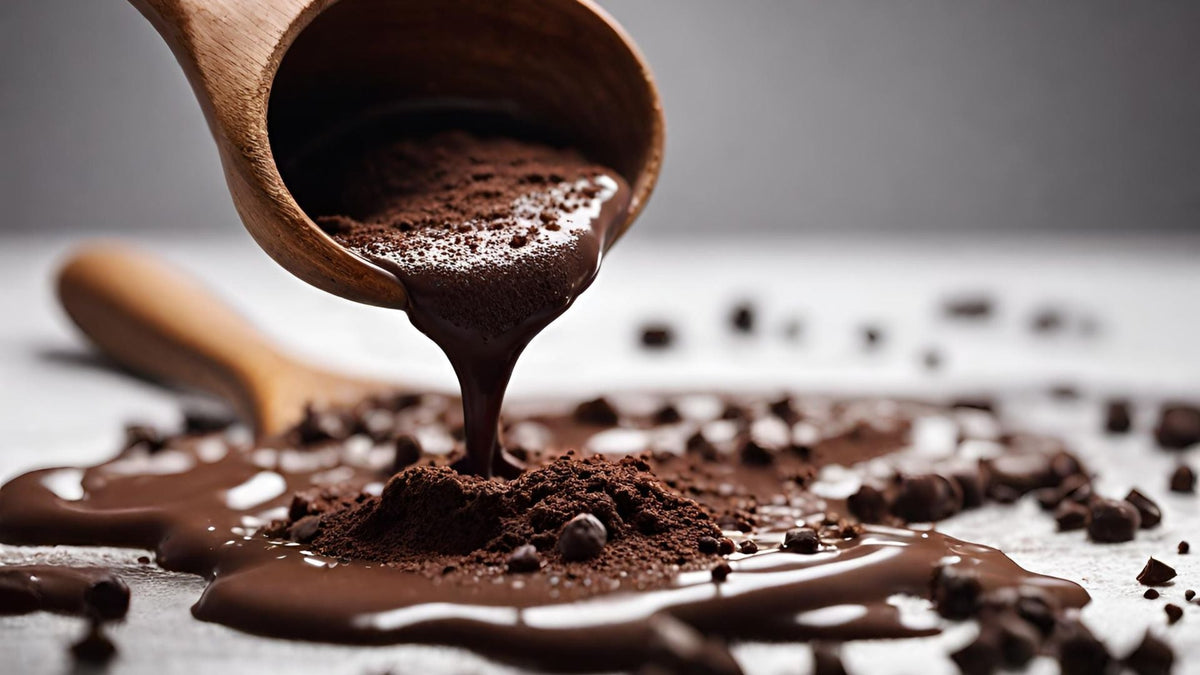
Chocolate occupies a strange place in modern food culture. Many think of it as a reward, whilst others may reach for it for comfort. We gift it for birthdays and celebrations, and over time, we have come to see certain foods as ‘indulgent’, and chocolate has unfortunately become a symbol of this.
Long before chocolate became a confectionery aisle staple, cacao was being fermented, ground, mixed, poured, exchanged and consumed across Mexico and Central America. Archaeological evidence from pottery found in Honduras suggests cacao beverages were actually being made before 1000 BC.
Throughout its history, cacao has been part of rituals and traditions, a valuable commodity and even a symbol of status. Yet somewhere along its journey to becoming the chocolate we know today, the complexity of cacao has become lost.
Before chocolate was sweet.
For cultures including the Maya and Aztecs, cacao was much more than something sweet to enjoy. It was connected to ceremonies, celebrations and everyday social life.
Over thousands of years, cacao travelled across countries and cultures, with recipes evolving along the way. Sugar was added and, eventually the bitter cacao drinks of the past developed into the sweet chocolate we recognise today. Behind that sweetness, the cacao bean itself remained complex, and when we look more closely at what it contains, a much more interesting nutritional story begins to emerge.
The fat inside cacao.
One of the more interesting parts of cacao is something that rarely makes it into conversations about chocolate: its fatty-acid composition.
Cocoa butter contains three principal fatty acids in roughly similar proportions: oleic acid, palmitic acid and stearic acid. Today we are focusing on stearic acid.
It is technically a saturated fatty acid, which might encourage us to place it immediately into the broad category of ‘saturated fat’. But nutrition is often less tidy than the categories we build around it.
Research has explored how stearic acid may behave differently from other saturated fatty acids, particularly in relation to blood cholesterol, adding nuance to our understanding of dietary fat.
Cocoa flavanols have also become an area of scientific interest, including research into their relationship with vascular function. While the research continues to evolve, it offers an interesting reminder that cacao is more nutritionally complex than we might assume from its association with chocolate we find on the confectionery shelves.
Can chocolate make us perform better?
Cocoa flavanols have also attracted interest within exercise research, particularly because of their relationship with vascular function and the way our cardiovascular system responds to physical activity.
Studies have explored everything from blood flow and oxygenation to exercise capacity and recovery, with varied results. Some small studies have observed changes in certain physiological measures following cocoa flavanol or dark chocolate consumption, while others have found little or no difference in exercise performance.
Much of this research remains relatively small and findings are mixed, making it difficult to draw broad conclusions about what cacao might mean for exercise or athletic performance. What it does offer is another interesting area of research into cacao, and another reminder of just how complex this ancient ingredient can be.
The problem with labelling food as ‘good’ and ‘bad’.
Nutritional categories can make food easier to understand, but the reality is often more nuanced.
Cocoa butter is an interesting example. Stearic acid is classified as a saturated fatty acid, yet researchers continue to explore how it compares with other saturated fats. Chocolate itself adds another layer: different varieties contain different amounts of cocoa solids, cocoa butter, sugar, milk and other ingredients, while cocoa flavanol content can vary depending on the cacao and how it has been processed.
Rather than asking whether chocolate is simply ‘good’ or ‘bad’, perhaps the more interesting question is what we discover when we look beyond those labels.
Quality changes the conversation.
When researchers investigate cocoa flavanols or stearic acid, they are looking at specific components found within cacao. This does not mean every chocolate product is nutritionally equivalent.
Cacao variety, ingredients and processing can all shape the final product. With good-quality dark chocolate, cacao itself can become more prominent - bringing back some of the complexity and bitterness that can be lost when sweetness takes centre stage.
What Kurami takes from this.
At Kurami, we believe nourishment is about appreciating food in all its complexity rather than placing ingredients into categories of ‘good’ or ‘bad’.
Chocolate is a beautiful example. For thousands of years, cacao has been enjoyed in many forms, as part of rituals, traditions and everyday moments of pleasure. Today, research is giving us new ways to explore this ancient ingredient and its complexity.
High-quality dark chocolate, thoughtfully made desserts and drinks all have a place within the Kurami experience, simply as part of a varied and balanced way of eating. It is important to remember that pleasure is part of nourishment too. When food is made with enough care, there does not need to be a divide between what supports you and what you genuinely want to eat.
Sources & further reading:
-
Ding EL et al. (2006), Chocolate and Prevention of Cardiovascular Disease: A Systematic Review. Read the full paper via PubMed Central
-
Sun Y et al. (2019), Dose-response relationship between cocoa flavanols and human endothelial function. Read on PubMed
-
Decroix L et al. (2018), Cocoa Flavanol Supplementation and Exercise. Read on PubMed
-
Patel RK et al. / dark chocolate exercise research. Explore cocoa flavanol and exercise research on PubMed
Medical note.
This article is for general information only and is not medical advice.
FAQs.
Is dark chocolate good for you?
Dark chocolate contains naturally occurring compounds from cacao, including cocoa flavanols, which continue to be studied by researchers. Rather than labelling chocolate simply ‘good’ or ‘bad’, it can be more helpful to consider its ingredients, quality and place within the wider diet.
What are cocoa flavanols?
Cocoa flavanols are naturally occurring plant compounds found in cacao. They have become an area of scientific interest, including research exploring their relationship with vascular function.
Is higher-cacao chocolate better?
A higher cacao percentage generally means a greater proportion of cacao-derived ingredients, but percentage alone does not determine quality or nutritional value. The cacao, processing methods and other ingredients all contribute to the final product.
Can chocolate be part of a balanced diet?
At Kurami, we believe pleasure and nourishment can exist together. Chocolate can form part of a varied, balanced way of eating, which is why cacao features across some of our own recipes. One Mealpath favourite is our Kurami Berrylicious Truffles blending freeze-dried raspberries, coconut and high-quality cocoa into a delicious snack.