
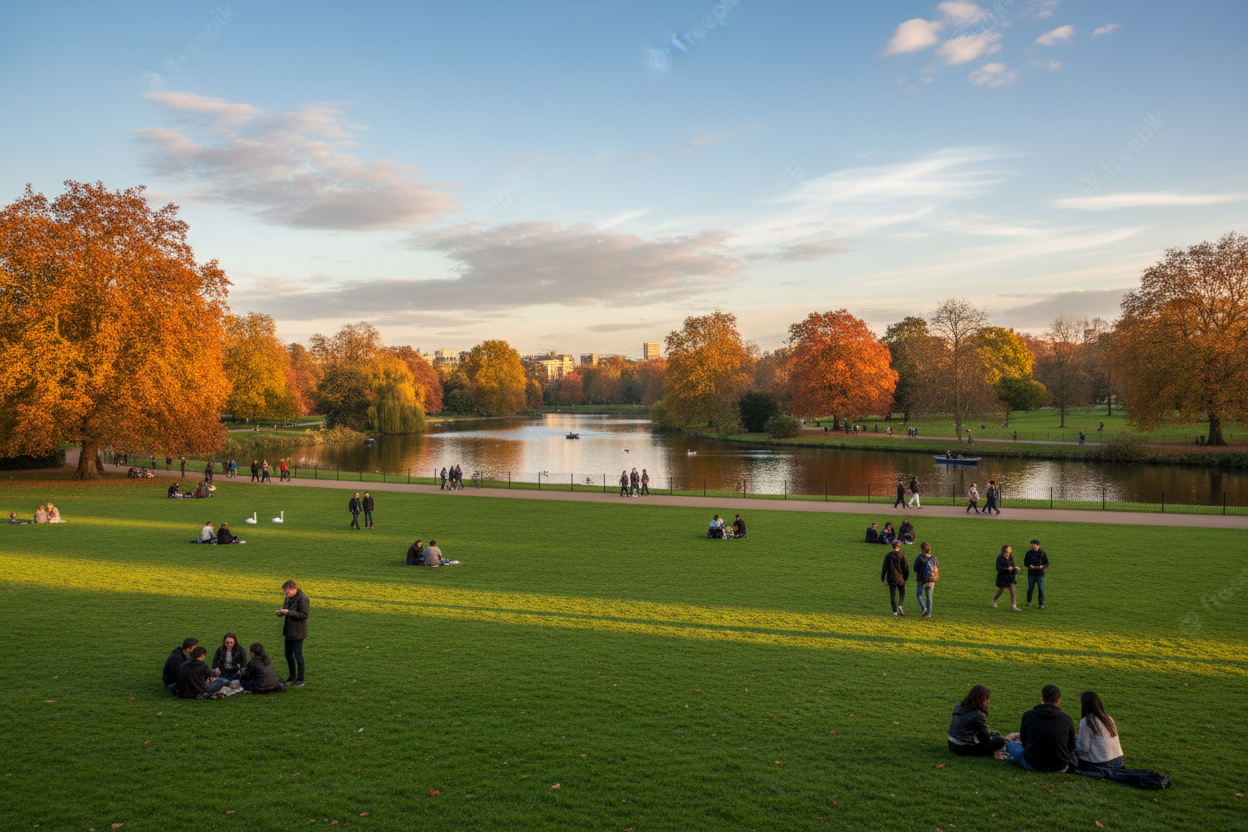
The aerial views of Hyde Park this summer were hard to ignore: a familiar London landscape turned dry, pale and almost brittle. It made the wider question feel much closer to home. If this is what drought looks like in the middle of the city, what is happening across Europe’s fields, farms and food systems?
Across Europe, the summer of 2026 has made drought feel less like a distant climate warning and more like something entering the kitchen by other routes: through wheat yields, maize harvests, grassland, irrigation restrictions, livestock feed, food prices, supermarket sourcing, restaurant menus and the fragile confidence that the foods we are used to will continue arriving in the same way, at the same price, in the same season.
In France, heat and drought have pushed maize forecasts sharply down, with the agriculture ministry projecting a crop around 35% lower than last year. Across the EU, the Joint Research Centre has warned that persistent heat and exceptional water deficits have sharply reduced summer crop prospects, with local crop failure likely in the worst-affected regions. In England, official drought updates have described lower crop yields, poor grass growth, pressure on winter livestock forage, declining river flows and restrictions on water use, while the UK’s hot, dry summer has made the idea of drought feel less foreign than it once did.
But drought is not only a story about crops failing somewhere else, it is a story about the assumptions underneath modern eating.
For a long time, much of contemporary food culture has been built around a quiet belief in stability: enough water, enough predictable seasons, enough cheap grain, enough forage, enough irrigation, enough imports, enough elasticity in the system to absorb shocks without most consumers having to think too much about the soil, the river, the aquifer or the farmer.
Water, the ingredient we do not list.
In food culture, water is often invisible until it is missing.
We speak about ingredients, recipes, protein, fibre, calories, flavour, organic certification, regenerative farming, food miles, packaging and waste, but water is so fundamental that it almost disappears from view. It is there before the ingredient becomes an ingredient: in the soil, in the plant, in the animal, in the processing facility, in the washing, cooling, cooking, cleaning, transporting and preparing of food. Drought makes that invisible dependency visible.
For many people, drought still sounds like infrastructure language: reservoirs, abstraction, river flows, groundwater, hosepipe bans. It belongs to government updates, water companies and weather reports. But food teaches us that water is never only infrastructure. It is inside bread before bread exists. It is inside salad leaves before they are washed and dressed. It is inside grass before it becomes milk, butter or beef. It is inside the field before it becomes grain, oil, feed, flour or pasta. The truth is that climate is already inside the plate.
The difficulty is that modern food systems are very good at hiding this. A supermarket shelf can make food appear detached from weather. Packaging can make it seem detached from soil. Imports can make it seem detached from place. A menu can make it seem detached from season. This years visible drought interrupts that illusion.
Abundance is a cultural belief.
Abundance is never only about quantity. It is also a feeling, a promise, a story a society tells about the world it lives in. A full supermarket shelf communicates security. A menu full of year-round choice communicates control. A strawberry in December, salad leaves in January, cheap chicken, cheap bread, imported fruit, constant availability and a cuisine that no longer has to obey the weather all tell a very modern story: that seasonality can be softened, distance can be managed, and nature can be negotiated with through logistics.
Modern supply chains have brought variety, pleasure, nutrition and cultural exchange. They have allowed people in London to eat foods from Italy, Japan, Mexico, Korea, Lebanon, India, Greece and beyond. They have made modern eating more diverse and, in many ways, more imaginative, but they have also encouraged a certain forgetfulness.
Food does not begin in the supermarket. Choice is not produced only by demand. It is produced by rainfall, soil moisture, seed, labour, irrigation, storage, fuel, transport, policy, insurance, farm income and the willingness of someone somewhere to carry risk before the rest of us see a price label.
Wheat is not just bread. Maize is not just animal feed, cereal, starch or an ingredient in a supply chain. Grassland is not just countryside. Water is not just something that comes from a tap. These are cultural foundations of eating, and when they become unstable, the meaning of abundance changes too. Perhaps abundance can no longer mean everything, everywhere, all the time?
Perhaps it has to mean enough good food, produced with more respect for water and land, wasted less casually, and cooked in ways that still make people want to come to the table.
The UK cannot treat drought as a continental problem.
It would be easy in Britain to look at French maize, Romanian farmland, Italian irrigation, German rivers or Spanish reservoirs and imagine drought as something happening to Europe in the continental sense, while the UK remains mainly a country of rain, mild weather and green fields, but that image is no longer reliable.
The UK depends on complex food supply chains, imports and regional growing patterns that are all sensitive to climate instability. We import fruit, vegetables, grains, feed ingredients, oils, specialist products and many of the foods that make modern British eating feel varied and abundant. When drought affects several regions at once, the old comfort of importing from somewhere else becomes less secure.
This is where the UK food conversation becomes more intimate. Drought is not only about whether a field in France produces less maize, or whether a river in Germany runs too low for transport, or whether a crop in eastern Europe suffers during pollination. It is about whether bread becomes more expensive, whether animal feed costs rise, whether vegetables become less reliable, whether restaurants change menus, whether prepared food becomes harder to source well, and whether the weekly shop becomes another place where people feel the pressure of a changing climate. In the UK, this lands on top of an already anxious food culture.
People have lived through years of food-price pressure, energy bills, rent increases, wage strain and the exhaustion of trying to eat well when life feels expensive. Drought does not arrive at a neutral table. It arrives at a table where many people are already making compromises.
Food prices are cultural because they change how people eat. They change what becomes ordinary, what becomes aspirational, what becomes a treat, what disappears from the weekly shop and what kinds of foods quietly become reserved for people with more money.
That is one of the least comfortable parts of the climate-food conversation. Climate shocks may begin in weather, but they do not land equally.
Seasonality, without nostalgia.
I love seasonality, but I do not think we should romanticise it too easily.
Historically, seasonality was not always charming. It could mean scarcity, repetition, hunger, preservation out of necessity and a much narrower diet. The old food world was not automatically more virtuous simply because it was less globalised. There is no need to pretend that the past was easier, fairer or more delicious for everyone. But a completely seasonless food culture is also a fantasy.
Drought may force a more mature version of seasonality, one that is not about rustic nostalgia or restaurant poetry, but about understanding that some foods should move in and out of prominence depending on weather, water, soil and supply. It may ask us to become more flexible, less entitled to everything at all times, and more appreciative of foods that thrive with lower inputs or can be stored, cooked, preserved and used well.
This is where older food cultures still have something to teach us, not because they were perfect, but because many of them were built around adaptation.
Beans, lentils, chickpeas, grains, bitter greens, preserved vegetables, dried herbs, fermented foods, soups, stews, broths, olive oil, vinegars, tinned fish, dried fruit, seasonal fruit, roots, cabbage, potatoes, onions, pulses and grains are not glamorous in the way food trends often want glamour, but they contain a quiet intelligence. They belong to ways of eating that know how to stretch, store, soften, flavour and make meals from what is available.
As an Italian, this feels very familiar to me. So much of the food I grew up understanding as good food was not luxurious in the obvious sense. It was careful. It knew how to use beans, greens, pasta, rice, bread, olive oil, tomatoes, anchovies, herbs, fruit, leftovers and time. It knew that a meal could be generous without being wasteful, simple without being poor, seasonal without being joyless.
The future may require us to remember forms of flexibility that modern abundance taught us to forget.
The drought is also a story about labour.
One of the least generous things about modern food culture is how far it separates the consumer from the person who grows the food.
We see the price, the product and the brand. We do not always see the farmer watching rainfall forecasts, cutting crops early, deciding whether to irrigate, negotiating restrictions, dealing with hard soil, lower yields, animal feed pressure, fire risk, financial uncertainty and the emotional exhaustion of trying to produce food in conditions that no longer follow the patterns they were trained to expect. Weather is not abstract when your income depends on it.
A dry park in London is unsettling because it changes the look of a city. A dry field changes the life of the person who planted it, financed it, insured it, waited for it, and hoped that the season would hold.
Food anthropology is useful here because it reminds us that food is never only a product. It is a relationship between people, land, labour, weather, memory, trade and appetite. When we speak about food security or food prices, we are also speaking about the people asked to absorb uncertainty before it reaches the rest of us.
What this means for the way we eat.
The answer to drought cannot be panic, and it cannot be pretending that everyone should cook everything from scratch, buy only local food, give up pleasure, or turn every meal into a climate calculation. People are already overwhelmed. They do not need more food noise. But we may need a different understanding of what good food means.
Good food cannot only mean beautiful ingredients arranged in a world that assumes unlimited choice. It has to mean food that is nourishing, pleasurable and more aware of the conditions that make it possible. It has to mean valuing pulses not as a compromise, but as beautiful foods with protein, fibre and cultural depth. It has to mean using grains and vegetables with respect. It has to mean wasting less, not as a moral slogan, but because waste becomes harder to justify when harvests are under pressure. It has to mean letting menus and habits become more flexible, without making people feel punished.
This is where Kurami sits for me. We prepare food for people who are busy, often tired, often trying to eat well in a city that does not make it easy. I do not believe the answer is to romanticise a life where everyone has endless time to shop, cook, soak beans, make stock, ferment vegetables and prepare three beautiful meals a day. I love those things, but I also understand that modern life does not always allow them.
So the question becomes: can prepared food still carry care?
I think it can.
A meal can be convenient without being careless. It can be prepared outside the home and still be built around plants, protein, fibre, grains, vegetables, herbs, olive oil, texture, acidity and pleasure. It can reduce decision fatigue. It can help someone eat more steadily. It can make pulses, vegetables, grains and seasonal ingredients feel desirable rather than dutiful.
That matters because people do not change how they eat only because they are given information. They change when new habits become meaningful, pleasurable, socially acceptable and practically possible.
The plate is not separate from the weather.
When people search for drought and food prices, they are not only looking for agricultural data. They are asking whether their weekly shop will become more expensive, whether bread will cost more, whether fruit and vegetables will be affected, whether climate change is already changing what they eat, and whether there is anything useful to do beyond worrying. The answer is not simple, but it is not hopeless either.
Europe’s drought shows that food culture has to become more resilient, and resilience is not only a technical word. It is a cultural one. It means learning to value flexibility, seasonality, pulses, grains, preservation, water, soil, farmers, diversity and meals that can adapt without losing pleasure.
It also means letting go of the idea that abundance is proven by having everything available all the time.
The drought is a warning, but it is also an invitation to look again at the assumptions underneath modern eating. The food system was built around water we did not always notice. Now we have to notice that the plate was never separate from the weather.
We are simply beginning to see it.
Camilla Pigozzi Garofalo studied social anthropology and the anthropology of food before founding Kurami, a gut-health meal delivery company focused on plant diversity, balanced nutrition, and sustainable ways of eating. She writes about food culture, eating rituals and the relationship between nutrition and everyday life.
FAQs
How is the 2026 drought affecting food in Europe?
The 2026 drought and heatwaves have affected crops across Europe, especially summer crops such as maize and sunflowers, as well as grassland and livestock feed. The EU Joint Research Centre has warned of sharply reduced summer crop prospects, with local crop failure likely in the worst-affected regions.
How is the drought affecting the UK food supply?
In England, drought updates have described reduced crop yields, poor grass growth, pressure on winter livestock forage stocks, lower river flows, lower groundwater levels and pressure on agriculture. UK wheat and other cereal yields have also been affected by hot, dry conditions.
Will drought make food prices rise in the UK?
Drought can contribute to higher food prices by reducing yields, increasing feed and irrigation costs, tightening supply and increasing reliance on imports. The final impact on UK food prices depends on global commodity markets, energy costs, exchange rates, retailer contracts and how pressure is absorbed through the supply chain.
What foods are most affected by drought?
Drought can affect maize, wheat, barley, oats, vegetables, fruit, potatoes, sugar beet, grassland and animal feed, depending on the region and timing. Maize and sunflowers are particularly vulnerable during key summer growth stages, while grassland stress can affect livestock and dairy production.
What does drought have to do with food culture?
Drought changes how societies understand abundance, seasonality, water, farming and food security. It reveals that food is not simply a consumer product, but the result of climate, soil, labour, infrastructure, trade, policy and cultural expectations around choice and availability.
Why does drought matter for the way we eat?
Drought matters because it exposes the hidden water and weather behind ordinary food. It can affect crop yields, food prices, animal feed, supermarket sourcing, restaurant menus and the expectation that the same foods will be available all year.
What is Kurami’s view on drought and food?
Kurami’s view is that climate-aware food should still be pleasurable, nourishing and practical. Resilience should mean more intelligent use of plants, pulses, grains, vegetables, fibre, protein, seasonality and less waste, without turning eating into another source of anxiety.
Sources and further reading
Joint Research Centre, Exceptionally dry and hot weather threatens summer crops
Joint Research Centre, Heatwaves impact summer and winter crops
Reuters, French drought could halve maize crop, deepen EU harvest losses
Reuters, Climate shocks hit EU maize heartland in Hungary and Romania
GOV.UK, National Drought Group meets after dry spring and recent heatwave
GOV.UK, Dry weather and drought in England: 31 July to 6 August 2026
GOV.UK, Dry weather and drought in England: 7 to 13 August 2026
GOV.UK, Dry weather and drought in England: 14 to 20 August 2026
Reuters, UK summer was hottest on record, Met Office says, after severe heat, drought
Reuters, World food prices at highest since 2022 as supply risks mount, FAO says