
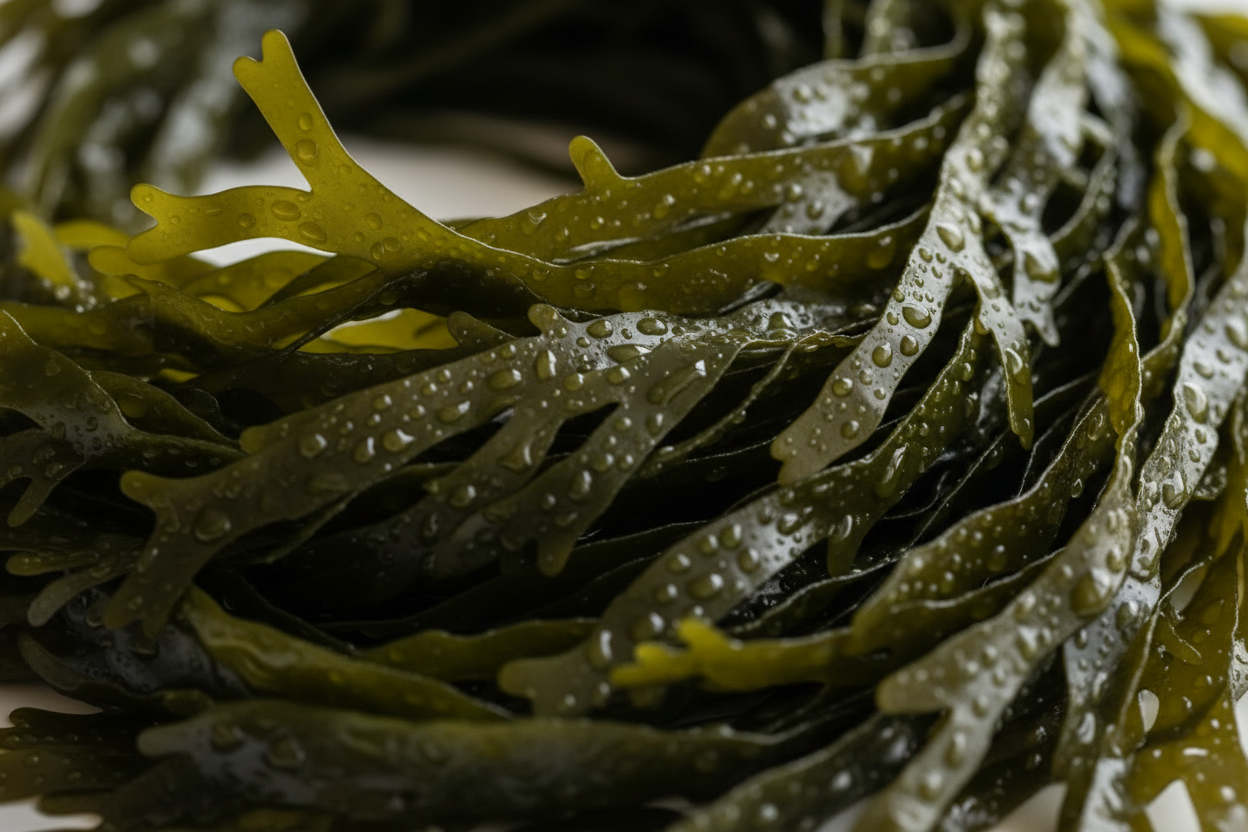
Every so often, a single compound gets extracted from a traditional food, given a scientific name, and sold back to us at a markup. Fucoidan is currently somewhere in that journey. It is found in brown seaweeds such as kombu, wakame and mozuku, all of which are part of long coastal food traditions, particularly in Japan, Korea and Okinawa. It is now appearing in supplements promising immune-positioned messaging, gut benefits and inflammation-related effects in early research.
What it is.
Fucoidan is a family of sulphated polysaccharides found in the cell walls of brown seaweed. In plain English, it is a complex carbohydrate with a distinctive marine structure. Because humans do not digest these polysaccharides in the same simple way as starch or sugar, researchers are interested in how they may interact with the gut microbiome and immune signalling.
The communities that have eaten brown seaweed for generations did so not because of fucoidan. They ate seaweed because it was abundant, useful, savoury and woven into the architecture of meals: kombu in stock, wakame in soup, mozuku in small vinegared dishes, sea vegetables alongside rice and fish. That matters because the food pattern is more meaningful than the isolated compound.
What the evidence actually says.
Most fucoidan research is still preclinical: test-tube studies, animal models and mechanistic work. In those settings, fucoidan and other seaweed polysaccharides have shown immune-modulating, microbiome-related and inflammation-related mechanisms in early research. There are also early human studies and emerging clinical work, but the evidence remains limited, heterogeneous, and insufficient to support treatment-style claims.
A careful summary would be this: fucoidan is a promising marine compound under active research, particularly regarding the gut microbiome and immune pathways, but it is not a proven treatment or cure for any condition. The leap from a laboratory effect to a consumer supplement claim is a long one.
A correction worth making.
There is a famous microbiome story often used in seaweed writing: researchers found that some Japanese gut bacteria carried enzymes capable of breaking down seaweed-derived polysaccharides, likely reflecting long-term exposure to seaweed in the diet. It is a beautiful example of diet, microbes and food culture co-evolving. But it should not be lazily attached to fucoidan specifically. The classic study focused on porphyran and agar from red seaweeds such as nori, not fucoidan from brown seaweeds. The broader lesson is still powerful: what a population has eaten over generations may shape microbial capacities. The specific compound should be named accurately.
The food-first view.
My instinct, as someone who studies how people actually eat, is to be sceptical of the supplement framing. Fucoidan is found in whole seaweed, alongside iodine, fibre-like polysaccharides, minerals, and umami flavour. A bowl of miso soup with wakame or a stock made with kombu gives you seaweed in its original culinary context, rather than as an isolated extract.
There is one important caveat. Seaweed can be very high in iodine, and intake varies enormously by species and serving size. People with thyroid conditions, pregnant women, or anyone considering concentrated seaweed supplements should seek professional guidance. Food traditions often use seaweed in small, patterned amounts; supplements can remove that natural moderation.
Why this matters for how we eat.
Brown seaweed is worth including in a varied diet, not because of fucoidan alone, but because it is a flavourful marine plant with a long culinary history. At Kurami, seaweed belongs in cooking as an ingredient, not as a miracle claim. The most credible version of gut health is not built from extracts. It is built from a variety of fibres, plants, fermented foods, enough protein, and meals that people actually want to eat.
Camilla Pigozzi Garofalo studied social anthropology and the anthropology of food before founding Kurami, a gut-health meal delivery company focused on plant diversity, balanced nutrition, and sustainable ways of eating. She writes about food culture, eating rituals and the relationship between nutrition and everyday life.
FAQs.
What is fucoidan?
Fucoidan is a family of sulphated polysaccharides found in brown seaweeds such as kombu, wakame and mozuku. It is being studied for possible microbiome, immune and inflammation-related effects, but most evidence is still early.
Does fucoidan work?
Fucoidan has shown interesting effects in laboratory and animal research, with some early human studies, but there is not yet enough high-quality human evidence to treat it as a proven therapy. It should not be described as a cure or treatment.
Is it better to eat seaweed or take fucoidan supplements?
For most people, eating seaweed in normal culinary amounts is the more food-first approach. Supplements are more concentrated and may be inappropriate for some people, especially those with thyroid concerns because seaweed can contain high iodine levels.
Sources and further reading
4. EFSA topic page: Dietary reference values, including iodine and other nutrients.