
Procter & Gamble, the company behind some of the most recognisable household names in the world, has agreed to buy Thorne, the premium supplement brand, for $3.8 billion. On the surface, this is a story about a major consumer goods company expanding into wellness, prevention and personalised health. Underneath that, I think it says something much larger about the way supplements have moved from the edge of health culture into the centre of everyday life.
There was a time when supplements belonged to a more specific world. Namely, the health-food shop and the sports nutrition aisle, and served specific purposes. For example, a pregnancy multivitamin, or the bottle of vitamin C bought in winter because someone in the family was starting to feel unwell.
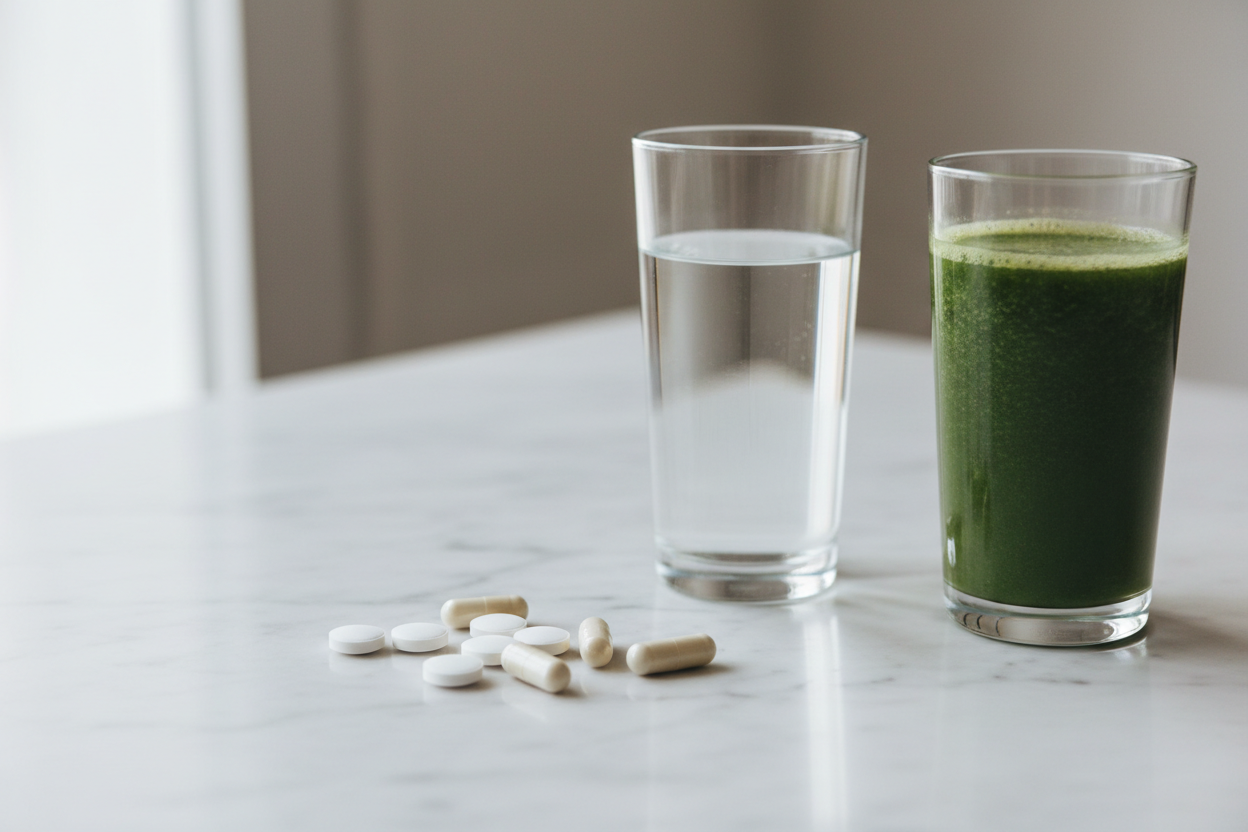
Now supplements sit everywhere. On bedside tables, in handbags, in office drawers, beside coffee machines, inside travel washbags, on subscription, in sachets, in gummies, in powders, in beautiful jars designed to be photographed, tracked and restocked before they run out.
Magnesium for sleep, creatine for strength, omega-3 for longevity, probiotics for the gut, vitamin D for winter, electrolytes for travel, adaptogens for stress, greens powders for the days when vegetables feel too far away.
This does not mean all supplementation is superficial. Some supplements are genuinely useful, sometimes necessary, and in certain cases clinically important. The point is not to dismiss them. The point is to understand why they have become such a normal part of how modern people try to care for themselves.
The supplement as a daily ritual.
Supplements are sociologically fascinating because they sit between food and medicine. They are not a meal, not a prescription, but they are small, portable gestures of intention.
A capsule taken after breakfast can feel like prevention. A powder mixed into water can feel like structure. A sachet packed for travel can feel like preparedness. A supplement routine can become a way of saying: I am doing something for my future body, even if the rest of the day is chaotic. That emotional role matters.
People do not only buy supplements because they have read clinical studies. They buy them because modern life often makes the body feel vulnerable: tired, inflamed, under-slept, overstimulated, hormonally complex, digestively unpredictable, ageing, travelling, working, recovering, trying to stay well inside a world that does not always make wellbeing easy. Supplement offer a small point of control.
Why P&G buying Thorne matters.
Procter & Gamble buying Thorne is not the same as a niche wellness brand being discovered by a few biohackers.
P&G is a household company. Its world is toothpaste, shampoo, razors, nappies, laundry detergent, skincare, hygiene, routine. These are the products that sit quietly inside daily life, repeated so often that they almost disappear into the background. That is why the acquisition matters culturally.
It suggests that supplements are no longer being treated as an optional wellness side-category. They are being absorbed into the ordinary architecture of the household. The question is becoming, what do you take every morning to manage energy, sleep, ageing, digestion, focus, hormones, immunity and recovery? The supplement is becoming part of the domestic routine, and that represents a major shift.
The move from cure to maintenance.
Modern health culture has become increasingly focused on maintenance. People do not only go to the doctor when something is wrong. They track sleep, wear glucose monitors, count steps, measure heart-rate variability, test vitamin levels, follow gut-health advice, take magnesium, drink electrolytes, buy protein powders, compare omega-3 brands, listen to longevity podcasts and talk about inflammation at dinner.
Some of this is empowering, but it is also exhausting, as the line between caring for the body and managing the body can become very thin.
Supplements sit exactly on that line. They belong to a culture in which health is no longer understood only as the absence of illness, but as something that must be maintained, optimised, protected and improved every day.
This is why a company like Thorne becomes valuable. It does not only sell capsules. It sells trust, evidence, personalisation, purity, performance and the feeling that health can be organised into a daily system. P&G buying Thorne shows that this system is becoming mainstream.
The globalisation of wellness rituals.
There is also a global story here. Supplement culture borrows from many places at once. It takes magnesium from mineral science, probiotics from microbiome research and fermented food traditions, adaptogens from herbal medicine systems, collagen from beauty culture, creatine from sports nutrition, omega-3 from cardiovascular research and fish-eating cultures, electrolytes from athletics and heat-adapted routines.
The modern supplement shelf is a global object. It gathers ingredients, traditions, scientific claims and marketing languages from many different places, then repackages them into a form that can be shipped, subscribed to and taken in London, New York, Dubai, Seoul or Los Angeles.
This is not automatically bad. Globalisation can spread useful knowledge. It can make once-specialist products easier to access. It can help people learn from cultures that have longer histories of using certain plants, foods, minerals or practices.
But something changes when a food, herb or health practice becomes a global consumer product, as they tend to become standardised, branded and extracted from their original context.
A traditional practice may have once belonged to a season, a family, a climate, a ritual, a kitchen, a healer, a meal or a particular way of living. In the supplement economy, it often becomes an ingredient claim. This transformation is part of the story.
From the kitchen to the capsule.
Supplements tend to appear where food feels difficult. People are busy. They travel. They work late. They sleep badly. They eat at desks. They do not always know what to cook. They want more protein, more fibre, more plants, more minerals, more regular digestion, more energy, more calm. They are told to eat better, but eating better requires shopping, planning, chopping, cooking, cleaning, choosing, resisting, deciding and doing it all again the next day.
A capsule is much simpler, as it compresses effort into a gesture.
It does not ask for a pot, a pan, a recipe, a table or time. It allows people to feel that they have done something good for themselves in a world where the ordinary work of feeding oneself can feel surprisingly heavy. This is why supplements cannot be understood only through efficacy. They also have to be understood through convenience, hope and the emotional economy of modern life. They answer a real need, even when the answer is not always complete.
The authority of science.
Thorne is not just any supplement brand. Its value comes partly from the fact that it has positioned itself around quality, science, practitioner trust, testing and premium credibility. That matters because supplement culture has always had a trust problem. The category contains excellent products, weak products, exaggerated products, unnecessary products and products marketed with claims that can easily outrun the evidence.
Clients want to know that what they are taking is clean, tested, absorbable, effective, free from unnecessary additives and connected to some form of professional legitimacy. This is where brands like Thorne have been very successful. They do not sell only nutrients. They sell confidence in a market where confidence is hard to earn. For P&G, that kind of trust is commercially powerful. For consumers, it reflects a broader shift: people want products that feel both natural and scientific, both preventive and premium, both personal and professionally validated.
Personalisation and the new supplement culture.
The next stage of supplementation is not only about buying a bottle and it is about personalisation. Testing, questionnaires, data, AI tools, subscription routines, personalised packs, biomarker dashboards, sleep data, gut data, hormone conversations, ageing profiles, athletic performance, perimenopause, fertility, recovery, cognition.
Health is becoming a data story.
The supplement routine is increasingly presented as something that should match the individual body, not simply the general population. There is something valuable in that. People are different. Needs vary. A woman in perimenopause, an athlete, a pregnant person, someone recovering from illness, someone with low vitamin D, someone with restricted dietary intake and someone eating a varied, balanced diet do not all need the same thing. Personalisation can correct the laziness of one-size-fits-all wellness, but, at the same time, it can create another kind of food noise.
If every symptom, every dip in energy, every poor night of sleep and every imperfect day becomes a sign that the body needs a new product, the person can end up feeling less supported rather than more. The promise of personalised wellness is that it can make care more precise. The risk is that it can make the body feel like a never-ending project.
Food first, not food only.
My position is not anti-supplement. I take supplements. I believe in them when they make sense. Vitamin D, omega-3 for people who do not eat enough oily fish, creatine for strength and ageing, B12 where needed, iron only when appropriate, probiotics, electrolytes for heat, travel or heavy sweating. There are many situations where supplementation can be genuinely useful. But I also strongly believe that they are not a substitute for eating in a balanced way, nor a substitute for movement and sleep.
They are not a substitute for enough protein, enough fibre, enough plants, enough minerals from food, enough hydration, enough regularity, enough medical investigation when something is wrong. They can however support a pattern and a lifestyle.
This distinction matters because the supplement market often grows in the space created by modern disconnection from food. If meals are poor, irregular, ultra-processed, rushed or nutritionally thin, supplements can begin to feel like a way of correcting the day afterwards. Supplements can help, but they can also become a ritual of reassurance around a deeper problem.
At Kurami, we are much more interested in building the foundation: food that already contains structure, plants, protein, fibre, colour, flavour and care, so that supplements can be used thoughtfully rather than desperately.
What this says about people.
The Thorne deal says a lot about the market, but it says even more about people. People want to live longer, but they also want to feel better now, and they want to trust their bodies, but many feel uncertain inside them. They want healthcare, but often meet systems that are overstretched, reactive or difficult to access. They want prevention, but prevention can feel confusing. They want food to be enough, but daily life often makes eating well harder than it should be.
The supplement category sits inside all of that, not simply as a product, but rather as tiny rituals of hope, control, prevention, aspiration and care. Supplements contribute and are effectively selling the feeling that the future body can still be influenced.
The supplement cabinet as cultural object.
The supplement cabinet shows the private architecture of modern self-care. The magnesium, the omega-3, the vitamin D, the probiotic, the collagen, the creatine, the electrolytes, the sachets for travel, the capsules bought after a podcast, the powder recommended by a friend, the half-finished bottle from a previous wellness phase. To me, the supplement cabinet is an archive of people trying to sleep, age, digest, recover better. To be less anxious, less inflamed, and the list goes on.
What the deal really tells us.
P&G buying Thorne tells us that wellness is no longer a subculture, it is household infrastructure. The same companies that once organised how people washed, shaved, cleaned, moisturised and cared for babies are now moving deeper into how people supplement, prevent, personalise and maintain the body across a lifetime.
This shows that health has moved from the clinic into the kitchen, the bathroom shelf, the phone, the subscription model and the morning routine. It shows that prevention has become a consumer category. It shows that people are willing to spend on the possibility of feeling better, even when the evidence, the need and the marketing are not always perfectly aligned. For me, the lesson is not that supplements are good or bad, but that they have become one of the ways modern people negotiate uncertainty around the body.
They are food-adjacent, medicine-adjacent, beauty-adjacent, performance-adjacent, ageing-adjacent and identity-adjacent. They sit at the crossroads of science, hope, commerce, self-care and globalised food culture. They can be extremely useful, or completely unnecessary.
At Kurami, I will always come back to the same place: start with food, pattern, rhythm and care. Use supplements where they make sense, but do not let the supplement become a replacement for the meal, or the ritual of taking become a substitute for the deeper work of nourishing yourself.
FAQs
Why is P&G buying Thorne?
P&G is buying Thorne as part of a wider move into premium health, wellness, prevention and personalised self-care. Thorne gives P&G a strong position in the growing supplement market, especially among consumers looking for science-backed and practitioner-trusted products.
How much is P&G paying for Thorne?
P&G has agreed to buy Thorne for $3.8 billion in cash from L Catterton.
What does the Thorne acquisition say about the supplement market?
It shows that supplements are no longer niche. They have become part of the mainstream consumer health economy, attracting major global companies that see long-term growth in prevention, wellness, ageing, personalisation and daily self-care.
Are supplements replacing food?
Supplements should not replace food. They can be useful in specific contexts, but they work best when they support a wider foundation of balanced meals, enough protein, fibre, plants, sleep, hydration and appropriate medical advice.
Why do people take so many supplements now?
People take supplements for many reasons: prevention, energy, sleep, digestion, strength, immunity, beauty, ageing, travel, fertility, hormonal changes, performance and the desire to feel more in control of health. Supplements often provide a small daily ritual of reassurance.
What is Kurami’s view on supplements?
Kurami’s view is food-first, not supplement-free. Supplements can be helpful when chosen thoughtfully, but they should sit within a wider pattern of nourishing meals, plant diversity, protein, fibre, rhythm and care.
Sources and further reading.
Reuters, P&G buys supplements maker Thorne for $3.8 billion as wellness push intensifies
Financial Times, P&G seals $3.8bn deal for supplements company Thorne
Thorne, Thorne recognised as one of the 2026 TIME100 Companies
Thorne, Thorne merges with Onegevity; announces new parent company Thorne HealthTech
Thorne, L Catterton completes acquisition of Thorne HealthTech