
By Camilla Pigozzi Garofalo
A few years ago, matcha still felt like something you had to look for.
Now it is folded into the everyday language of cafés. Matcha lattes, iced matcha, strawberry matcha, hojicha, ceremonial powders, home whisks, reusable cups stained pale green. What was once niche has now become part of the ordinary choreography of modern city life.
Part of what fascinates me about matcha is that I have encountered it in very different forms over the years. I have had matcha prepared in a temple in Tokyo, where the ritual felt inseparable from the experience itself. I have eaten it folded into mochi in Japan, ordered iced strawberry matcha lattes in Seoul, and watched it become a familiar fixture of cafés in London, Paris and beyond.
Each version was different. Each belonged to its own place, audience and moment. Yet all of them seemed to carry something recognisable: the idea that a drink can be more than a drink. That it can become a ritual, a pause, a gesture of hospitality, or simply a small way of paying attention.
It is the drink before work, the drink between meetings, the drink carried back to the office, the drink people learn to make at home on a slow Sunday. It has become not just a flavour, but a small ritual vocabulary.
And now, perhaps inevitably, matcha has also become a supply story.
Recent reports suggest that the price of matcha has almost doubled in the past two years, as demand has risen sharply and café operators point to growing pressure on high-quality Japanese matcha, especially ceremonial-grade powder. In simple terms, demand has accelerated faster than high-quality production can comfortably respond.
But it would be too easy to reduce this to a story about younger consumers and café culture.
The more interesting question is why matcha became so desirable in the first place.
Which perhaps says something about why matcha arrived so perfectly into this particular cultural moment. Matcha has a long history, far older than its current life as an iced oat latte.
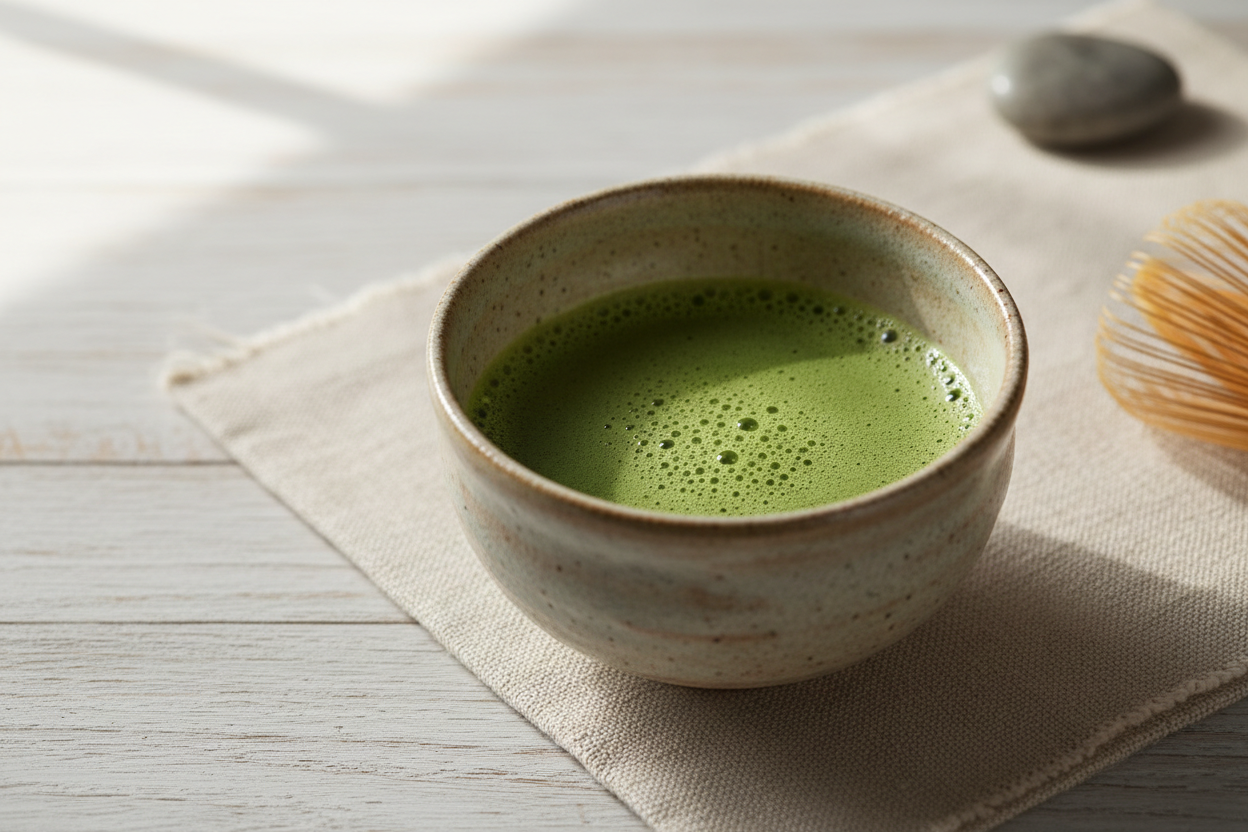
Powdered tea has roots in China, before the practice was brought to Japan and developed over centuries into something deeply connected to Zen Buddhism, hospitality, silence, discipline and attention. In the Japanese tea ceremony, matcha was never simply a drink. It was a ritual form. A way of arranging time. A way of paying attention to one thing properly.
For much of its history, matcha belonged to slowness. It required preparation, presence, and a relationship between host and guest. The bowl, the whisk, the movement, the silence, the order of things, all of it mattered.
The drink was not separate from the ritual. Rather, the drink was the ritual.
What we now call matcha culture in London, New York, Sydney, or Paris is something different. It is faster, more portable, more individualised, more aestheticised. It belongs to a city rhythm: before work, between meetings, after Pilates, on the way somewhere else. That does not make it meaningless; it just means it is doing different cultural work.
The modern matcha ritual.
There is something beautiful about matcha. The colour is vivid, almost beyond food. The preparation feels deliberate. The taste is grassy, clean, slightly bitter, softened by milk, ice or sweetness. It has a quiet visual language that makes it feel immediately distinct from other café drinks. But I would not position it against coffee.
As an Italian, espresso has never felt to me like the opposite of ritual. Quite the opposite. An espresso at the bar is one of the most established rituals of everyday life: quick, yes, but not careless. You stand, you order, you exchange a few words, you drink, you return to the day. It is brief, but socially held. A small pause that belongs to the city as much as to the person drinking it. Matcha belongs to a different ritual language.
Where espresso is often communal, compressed and conversational, modern matcha is frequently slower-looking, softer, and more visually composed. It has become associated with a particular atmosphere: morning light, quiet preparation, green colour, milk poured carefully, a desire for the day to begin with a little more attention.
Food and drink have always carried more than taste. They hold rhythm, identity, belonging, aspiration, care and memory. A cup of coffee, a glass of wine, a pot of tea, an iced matcha carried through London, each can become a way of marking who we are, where we are, and what kind of day we are trying to create. Using food as a symbol is not new. What is new is the speed at which these rituals now become visible, desirable and global.
Perhaps this is also why curiosity is beginning to move beyond matcha itself. Hojicha, with its roasted, warmer, quieter profile, is entering the same café vocabulary not as a replacement, but as another expression of the same desire: drinks that feel considered, atmospheric and slightly removed from the ordinary pace of coffee culture.
When a slow ritual becomes a fast global trend.
The question is not whether matcha should travel. Food has always travelled. Ingredients move, change, adapt, and become local in new ways. No cuisine is untouched by movement. No food culture is frozen in place.
The question is what happens when something slow becomes fast almost overnight.
A ceremonial drink becomes a lifestyle product. A ritual becomes a menu category. A practice shaped over centuries is compressed into a flavour, a colour, a photograph, a morning routine. It is then that demand accelerates.
There is a material consequence to that acceleration. Matcha is not infinitely available. High-quality Japanese matcha depends on specific agricultural practices, careful cultivation and processing, and a supply chain that cannot simply double because a drink has become fashionable.
This is where the price story becomes culturally revealing.
The rising cost of matcha is not just about scarcity. It is about the mismatch between two speeds: the slow pace of agricultural and cultural production and the fast pace of modern desire.
One moves through seasons, labour, land and craft.
The other moves through cafés, algorithms, aesthetics and appetite.
Neither is inherently bad. But they are not the same.
What the boom reveals about modern ritual.
Part of matcha’s appeal, I think, is that it gives a modern city ritual a visual and sensory form.
It is beautiful to look at. It requires just enough preparation to feel intentional. It can be made cold, hot, sweet, unsweetened, milky, ceremonial, playful, or serious. It moves easily between the café, the office and the kitchen. It is structured enough to feel ritualistic, yet flexible enough to fit into modern life.
That may be why it has travelled so well.
Many of the older rituals around food and drink were not elaborate. They were small, repeated acts that helped organise the day. The morning coffee. The tea after lunch. The glass of wine before dinner. The espresso at the bar. A gesture repeated often enough to become part of life’s architecture.
Matcha has entered that space for a different generation and a different rhythm.
Not because it is better than coffee. Not because it is more virtuous. But because it offers another way to mark a pause. A different texture of attention. A little colour, softness and ceremony inside a day that might otherwise move without much punctuation.
Food and drink have always done this kind of work. They help us create rhythm. They make ordinary time feel slightly more held. They allow us to turn appetite, taste and repetition into something that feels personal.
What is interesting about matcha is that it already carried a history of ritual before modern café culture made it popular. The contemporary latte version may be faster and more commercial, but part of its appeal still comes from that older association with care, preparation and attention.
Somewhere beneath the ice, the milk, the strawberry purée and the takeaway cup, there is still the idea of a pause.
From ritual to product.
As someone who runs a wellness brand, I think about this carefully.
Kurami exists inside this same cultural landscape. We also speak about nourishment, ritual, care, ingredients, rhythm, and the importance of making eating well feel beautiful enough to repeat. I do think, though, that the matcha boom reveals one of the central tensions of modern wellness. We are very good at turning rituals into products. Sometimes that is useful. Products can make care accessible. They can create pleasure. They can help people build habits that genuinely support them. But something can also shift when a ritual moves very quickly into a different cultural context.
A drink that once asked for silence becomes something consumed while rushing. A practice rooted in attention begins to carry new meanings in a different setting.
A cultural object begins to carry different associations as it moves through modern life. Understanding that context makes pleasure richer.
The more we understand where things come from, the less likely we are to flatten them into trends.
What Kurami takes from this.
For me, the lesson of matcha is not that modern wellness has ruined an ancient drink.
That would be too simple and too ungenerous.
The more interesting lesson is that people are still looking for ritual, even when life gives them fewer inherited rituals to hold on to. They are looking for beauty, softness, pause, identity, energy and care. Matcha happens to hold all of those things unusually well. The rising price is the market catching up with the cultural meaning.
A drink became a habit. A habit became a lifestyle. A lifestyle became demand. And demand, eventually, found the limits of supply.
There is something almost poetic in that. The slow thing became too fast for itself.
Perhaps the invitation now is not to abandon matcha, or mock its popularity, or treat it as another overexposed wellness trend. Perhaps it is simply to restore a little attention to it.
To remember that not every ritual needs to be optimised.
Not every beautiful food needs to become a performance.
Not every act of nourishment needs to become a signal.
Sometimes a drink can just be a drink.
And sometimes, if we let it, it can also be a small way of returning to ourselves.
Camilla Pigozzi Garofalo studied social anthropology and the anthropology of food before founding Kurami, a gut-health meal delivery company focused on plant diversity, balanced nutrition, and sustainable ways of eating. She writes about food culture, eating rituals and the relationship between nutrition and everyday life.
FAQs
What is matcha?
Matcha is a powdered green tea traditionally associated with Japanese tea practice. Unlike steeped tea, where the leaves are infused and removed, matcha is whisked into water or milk, meaning the powdered leaf itself is consumed.
Why are matcha lattes everywhere?
Matcha lattes have become popular because they sit at the intersection of café culture, wellness, ritual and aesthetics. They offer a visually distinctive drink, a softer alternative to coffee for many consumers, and a sense of intentionality that fits modern food and drink habits.
Why are matcha prices rising?
Matcha prices are rising because global demand has grown quickly, particularly through cafés, social media and younger consumers, while high-quality Japanese matcha supply is slower to expand. Ceremonial-grade matcha depends on specific cultivation and processing methods, so the supply cannot respond instantly to sudden global popularity.
Is matcha good for you?
Matcha contains caffeine, L-theanine and polyphenols, compounds often discussed in relation to alertness and antioxidant activity. It is best understood as one enjoyable part of a varied diet rather than a standalone health solution. Quality, preparation and overall eating patterns all matter more than any single ingredient.
What does the matcha boom say about modern food culture?
The matcha boom shows how quickly a slow, culturally specific ritual can become a global lifestyle product. It also reveals how much modern consumers seek small rituals of pause, beauty, and care within fast, fragmented lives, and what happens when desire moves faster than cultivation.
What is the difference between hojicha and matcha?
Both matcha and hojicha are Japanese teas, but they are quite different in flavour and preparation. Matcha is a powdered green tea with a vivid green colour and a grassy, slightly bitter taste, often associated with ceremonial tea practice and modern café culture. Hojicha is roasted rather than powdered, giving it a warmer, toastier and nuttier flavour, usually with lower caffeine content. While matcha has become strongly associated with bright, energetic wellness aesthetics, hojicha tends to feel softer, calmer and more autumnal in character.