
Protein has become one of the loudest words in food.
It is in bread, yoghurt, coffee, cereal, pasta, crisps, chocolate, snack bars and foods that were never traditionally understood through that lens. The word has moved far beyond gyms and sports nutrition, entering the supermarket aisle, the coffee order, the office snack drawer and the way people casually describe what they have eaten in a day.
A meal is no longer only breakfast, lunch or dinner. It is “high-protein.” A snack is no longer simply a snack. It is protein-rich, protein-boosted, protein-packed, reformulated and somehow made to feel more purposeful.
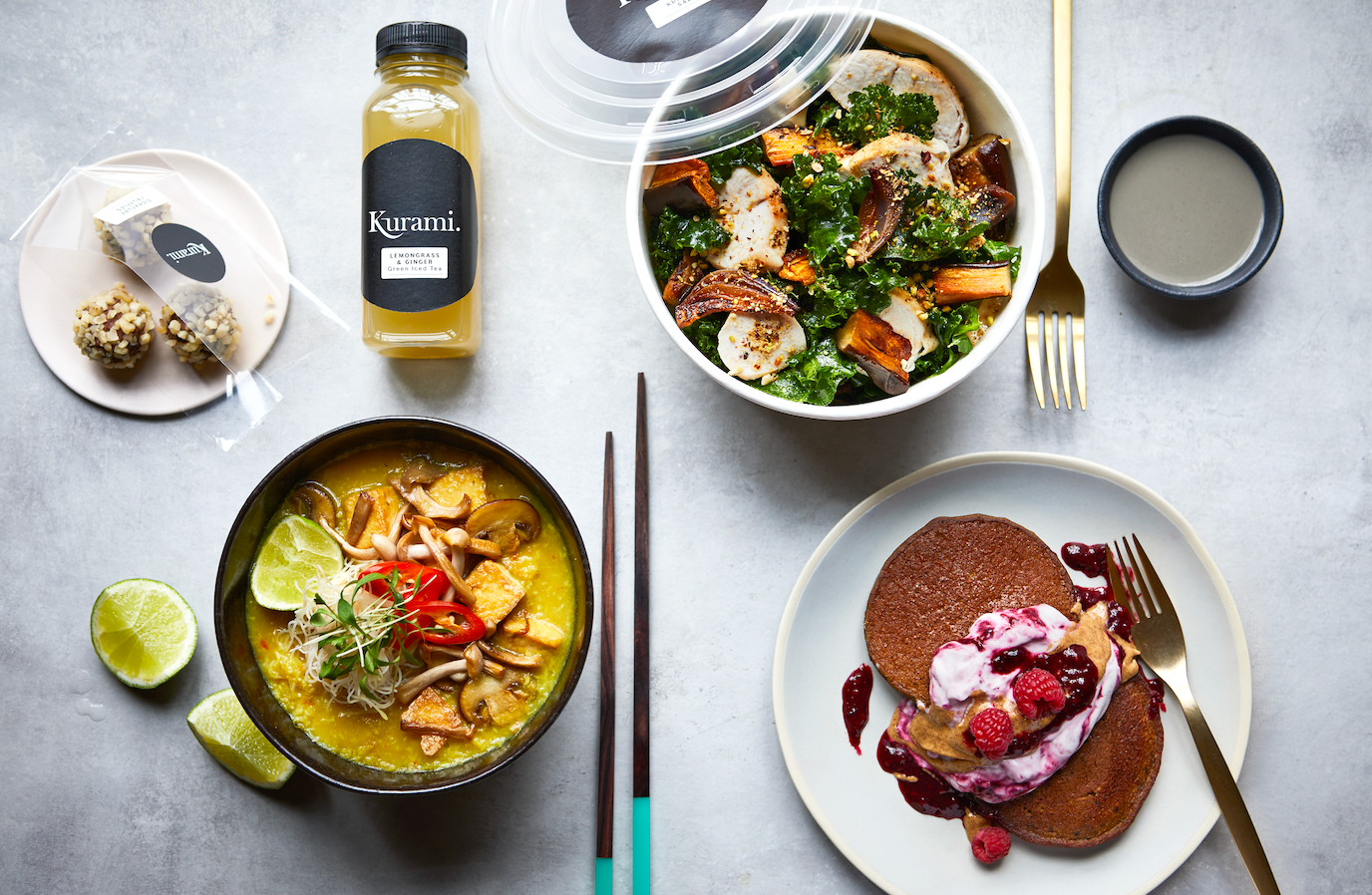
At Kurami, we do not treat protein as an afterthought. A meal without enough protein often does not hold the body properly, and our meals are built with protein as a central part of the macro structure, around 25%, because satiety, strength, recovery and steadiness matter. Protein is especially relevant for women, for active people, for anyone ageing, training, recovering, travelling often, working long days, or simply trying to eat in a way that feels more sustaining.
What I want to reflect on is why protein has become the word people trust most when they are trying to quiet the noise around food.
That noise is real. I know it personally, and I see it both in my private, and work life through Kurami. People are tired of being told to eat more plants, eat more protein, eat fewer ultra-processed foods, support their gut, think about glucose, avoid fear around carbohydrates, but perhaps reduce carbohydrates, eat intuitively, but also understand macros, age well, sleep better, stay strong, stay calm, and somehow make the “best” choices without becoming obsessive or feeling exhausted.
In that kind of noise, I understand why protein has become so reassuring. It is practical, measurable and genuinely useful, but it also offers something more emotional: the feeling that a meal has been built properly.
There is a longer history here, because diet culture has always had a way of choosing one nutrient and asking it to carry far too much meaning. For a long time, that nutrient was fat. Fat-free yoghurt, fat-free biscuits, fat-free dressing, fat-free everything. The absence of fat made food feel safer and more permissible, even when the food itself was not necessarily more nourishing. Protein now occupies a similar cultural space, but in reverse.
For a long time, fat carried the emotional burden of diet culture. Fat-free yoghurt, fat-free biscuits, fat-free dressing, fat-free everything. The absence of fat made a food feel safer, cleaner, more permissible, even when the food itself was not necessarily more nourishing. A label did more than describe nutrition.
Protein now does a similar cultural job, but in reverse: it is not the thing being removed, but rather the thing being added.
High-protein bread.
High-protein cereal.
High-protein chocolate.
High-protein coffee.
The language has changed, but the emotional structure is familiar. Once again, one nutrient is being asked to make food feel correct.
Researchers, dietitians and public-health experts are saying this in different ways. Christopher Gardner, nutrition researcher at Stanford, has compared the current protein treatment to the low-fat food culture of the 1990s. The International Food Information Council has described protein as the most sought-after nutrient in recent consumer research, while also showing that many people still do not know how much protein they actually need.
The protein boom is not only about nutritional need, but it is also about the cultural meaning of need.
Diet culture has become more sophisticated, as it now does not always sound like restriction. Sometimes it sounds like optimisation, strength, balance, performance, longevity and self-care. Much of that language can be useful, and some of it reflects real needs, but it can still leave people feeling that food must constantly justify itself.
A brownie becomes easier to choose if it has protein. A coffee becomes more respectable if it has protein. A snack becomes less emotionally complicated if it has protein.
The word does not only tell us what is inside the product. It tells us how we are allowed to feel about eating it, thus quieting the food noise. One of the reasons I built Kurami was to quiet some of that noise. Not to give people another rule, but to remove the need to negotiate with food all day. When meals are already considered, balanced and beautiful, the mind does not have to keep asking whether the plate is enough, whether it is too much, whether it has enough protein, enough fibre, enough plants, enough restraint, enough pleasure.
Food noise is not only a weight-loss phrase or an algorithmic wellness phrase, but it is a real experience for many people. It is the running commentary around food, the little calculations, the second-guessing, the sense that every meal has to be defended or optimised before it can simply be eaten. This is one of the reasons I care so much about structure. Not rigid structure, not diet structure, but the kind of structure that lets the body feel held, and the mind feel quieter. Enough protein helps. Enough fibre helps. Enough plants help. Enough fat, flavour, acidity, colour and pleasure help too. A good meal should not create more negotiation; it should reduce it.
This is the part of the protein conversation I want to keep. Protein can help a meal become steady. It can help with satiety, strength and the feeling that the body has been properly fed. But if protein becomes the only thing we trust, we have simply replaced one form of food anxiety with another.
We all know that food is not simply about a single ingredient or nutrient, and in most food cultures around the world, meals are not usually organised around isolated nutrients.
People understood fullness, strength, nourishment, scarcity, labour, recovery, fasting and celebration, but the meal itself was not imagined as a set of separated molecules. It was composed through season, place, habit, religion, family, weather, work, appetite and the knowledge of what had always made sense at the table.
Pasta e fagioli contains protein.
Fish with potatoes and greens contains protein.
Eggs with artichokes contain protein.
Lentils with olive oil contain protein.
Meat with bitter leaves, bread, herbs and acid contains protein.
Yet these foods do not present themselves as protein delivery systems. They belong to a wider pattern of eating in which nourishment is practical, sensory, social and repeated.
This is what modern nutrition language can sometimes flatten.
The body does not receive nutrients in isolation from experience. It receives the look of the plate, the smell, the temperature, the texture, the feeling of abundance or lack, the difference between something thrown together and something properly considered. It receives the emotional difference between eating something that technically contains protein and eating something that actually feels like lunch.
We must understand nourishment in its entirety.
The quieter work of fibre.
There is something almost unfair about the difference between the way protein and fibre are treated. Protein has confidence. It has language. It has packaging. It suggests strength, discipline and control. Fibre has never had the same glamour, although it deserves far more attention than it receives.
Fibre supports digestive regularity, contributes to satiety and helps feed the gut microbiome. It is found in the foods that make a pattern of eating feel more alive and more complete: vegetables, fruit, beans, lentils, whole grains, nuts, seeds, leaves, skins, stems, pulses, plants in their many forms.
In the UK, adults are advised to eat around 30g of fibre per day, but average intake remains below that level. Most people no longer need convincing that protein matters, yet many people still need help eating enough fibre, enough plants and enough diversity across the week. This is one of the reasons we speak so much about plant diversity at Kurami.
Not because fibre should become the next obsession. That would be the same reduction in another outfit. The point is composition. Meals are about balanced macros, both protein and fibre, plants and pleasure, satiety and digestion, texture and colour: they are about food that works both functionally, and visually. Food that still feels like food.
What Kurami takes from the protein boom.
At Kurami, we have always taken protein seriously as it strongly contributes to feelings of satiety, supports your body and makes you feel good. Meals should not look beautiful for ten minutes and then leave the body searching for something else an hour later. Protein is part of how a meal becomes steady, especially for women, for busy people, for people training, recovering, ageing, working long days, travelling often, or simply trying to eat in a way that feels more balanced and less chaotic.
This is why our meals are built with protein as a central part of the macro structure, around 25%, rather than as a decorative afterthought. It matters for satiety, strength, repair and the feeling that a meal has substance. However, the protein boom also reminds me why Kurami cannot be only about protein.
A good meal needs fibre, plants, fat, acidity, herbs, colour, texture and pleasure. It needs to make sense nutritionally, but also emotionally and culinarily. It needs to feel abundant without feeling heavy, balanced without feeling clinical, considered without feeling controlled. The goal is not to make people think about food more.
The goal is to help them think about it less, because the work has already been done with care.
Protein matters enormously, but the best meals do not reduce food to protein. They use protein as part of a wider composition.
So why is protein everywhere?
Because people want to feel full.
Because people want to feel strong.
Because people want clearer rules in a confusing food culture.
Because protein is countable in a way that “eating well” is not.
Because many people are under-building their meals and looking for more structure.
Because the word has become a form of permission.
Because food brands understand that permission sells.
Because the modern body is often treated as something to manage, and protein offers a sense of management.
Because we are all, in different ways, trying to feel less chaotic.
Protein may be the nutrient of the moment, just as fat once was the nutrient everyone tried to escape, but food is always larger than the word printed most loudly on the packet. The best meals remember that protein matters, fibre matters, plants matter, pleasure matters, and the body is not only something to manage. It is something to feed, listen to and live in.
Camilla Pigozzi Garofalo studied social anthropology and the anthropology of food before founding Kurami, a gut-health meal delivery company focused on plant diversity, balanced nutrition, and sustainable ways of eating. She writes about food culture, eating rituals and the relationship between nutrition and everyday life.
FAQs.
Why is protein in everything now?
Protein has become one of the clearest nutrition signals in modern food culture. It is associated with satiety, strength, muscle maintenance, recovery and more balanced meals, so brands now use protein claims on foods that were once simply bread, cereal, yoghurt, bars, drinks or snacks.
Is protein the new fat?
In cultural terms, protein is beginning to occupy the space fat once did in diet culture, although in the opposite direction. Fat was often removed to make food feel permissible. Protein is now added to make food feel purposeful, sensible and easier to justify. The comparison is not nutritional, but cultural.
Is protein important?
Yes. Protein is essential for growth, repair, muscle maintenance, immune function and many ordinary processes in the body. It can also help meals feel more satisfying. The point is not that protein does not matter, but that protein should not become the only way we judge whether food is nourishing.
How much protein do adults need?
General UK guidance often uses a reference intake of around 0.75g of protein per kilogram of body weight per day for healthy adults, although individual needs vary depending on age, activity level, pregnancy, illness, training, recovery and other factors.
Is high-protein eating better for gut health?
Not automatically. Protein can support satiety and meal structure, but gut health also depends on fibre, plant diversity, hydration, overall dietary pattern and consistency. A high-protein diet that is low in fibre and plants may not support the gut in the same way as a more balanced, plant-diverse diet.
Why does fibre matter?
Fibre supports digestive regularity, contributes to satiety and helps feed the gut microbiome. It is found in plant foods such as vegetables, fruit, beans, lentils, whole grains, nuts and seeds. In the UK, adults are advised to eat around 30g of fibre per day, but average intake remains below this.
Protein or fibre: which matters more?
You do not need to choose. A well-composed meal can include both: protein for structure and satiety, fibre for digestion and gut health, and plants for diversity, flavour, colour and pleasure.
Sources and further reading.
Stanford Medicine - How much protein should we really be eating?
IFIC - Protein-Dazed, And Still Confused: New IFIC Research Reveals America’s High-Protein Hype Does Not Match Knowledge
British Heart Foundation - Protein: how much do you need?
British Heart Foundation - Protein and exercise
NHS - Good foods to help your digestion
GOV.UK - National Diet and Nutrition Survey 2019 to 2023 report